Case Studies
Home / Project Details
- Child Custody Investigations
Criminal Defense Proven: One Witness. We Found Three More | Addison 75001
- Overview
Eight Days. Three Witnesses. One Belt Line Scene That Told a Different Story.
The call came in on a Tuesday. A Dallas County criminal defense attorney whose practice handles DWI, assault, and misdemeanor cases originating from the Addison and North Dallas corridor had a client charged with DWI following a traffic stop on Belt Line Road near the Dallas North Tollway in the 75001 zip code.
The client was not in a car. He was on a motorcycle.
That distinction mattered more than the prosecution’s report acknowledged. A rider on a motorcycle moves differently than a vehicle. Lane positioning, speed variation, and the natural handling characteristics of a bike navigating the Belt Line corridor at night can appear irregular to an untrained observer particularly one watching from behind through a driver’s side rearview mirror. What the 911 caller described as erratic behavior, the defense attorney believed was something far more ordinary: a motorcyclist riding a busy North Dallas road the way motorcyclists do.
The prosecution had the arresting officer’s report, a standardized field sobriety test result, and one witness a driver who had called 911 after observing the motorcycle through their rearview mirror on Belt Line heading east toward the Tollway interchange. The case, on paper, looked straightforward.
The defense attorney was not convinced. Her client maintained a consistent account that directly contradicted the arresting officer’s timeline. He had left a restaurant on Belt Line, ridden less than four minutes, and was stopped at a location his attorney believed raised serious questions about both the probable cause for the stop and the reliability of a rearview mirror observation as the basis for the 911 call.
“A motorcyclist on Belt Line looks different in a rearview mirror than a car does. If anyone else out there saw what actually happened that night, I needed them found before the hearing. I had eight days.”
The attorney retained Terrance Private Investigator & Associates on a Wednesday morning. By the following Thursday… eight business days later, our investigators had located and documented three independent witnesses the prosecution had never contacted, produced a physical scene analysis identifying a material discrepancy in the arresting officer’s timeline, and delivered a complete attorney-ready evidence package to counsel with four days to spare before the Frank Crowley Courts Building hearing.
This is how that investigation was built and why it represents the standard of criminal defense PI work that Dallas County defense attorneys should expect when jurisdictional knowledge and execution speed both matter. This is the standard of criminal defense PI work that Dallas County attorneys should expect.
- The Problem
The Prosecution's Account Depended on a Timeline That Did Not Hold Up
Criminal defense cases built on a single witness account are among the most PI-dependent matters in Dallas County court. The attorney referred to here as Counsel throughout this case study, consistent with our engagement confidentiality protocol had reviewed the arrest report carefully. Her client, a professional in the corporate corridor along the Dallas North Tollway, had been stopped at a specific intersection on Belt Line Road in Addison within minutes of leaving a dinner meeting at a restaurant in the 75001 zip code.
The 911 caller reported erratic driving observed through a driver’s side rearview mirror, at night, on a busy stretch of Belt Line Road. The subject was on a motorcycle. The officer’s report described an extended traffic stop with detailed field sobriety test observations. The client’s account described a brief stop, a normal interaction, and a timeline that, if accurate, created a significant gap between what the caller reported and when the stop actually occurred.
The Specific Factual Questions Counsel Needed Answered
The defense theory required answers to three questions before the Frank Crowley Courts hearing: Was there anyone else present on Belt Line at the time of the incident who could corroborate the client’s timeline? Did the physical layout of the Belt Line / Tollway interchange support or contradict the 911 caller’s account of a motorcyclist’s behavior? And critically did the sightline from the caller’s reported position allow a reliable observation of a motorcyclist ahead, given the distance, the lighting conditions, and the nature of rearview mirror observation on that stretch of Belt Line at that hour? Was there any surveillance camera infrastructure on Belt Line at the relevant location that the investigating officer had not accessed?
The prosecution had not attempted to locate additional witnesses. The police report listed one witness the 911 caller and no reference to any canvass of the area. The defense attorney had one week before the Frank Crowley Courts appearance at 133 N. Riverfront Boulevard. She needed field documentation, not legal argument, to put those questions to rest.
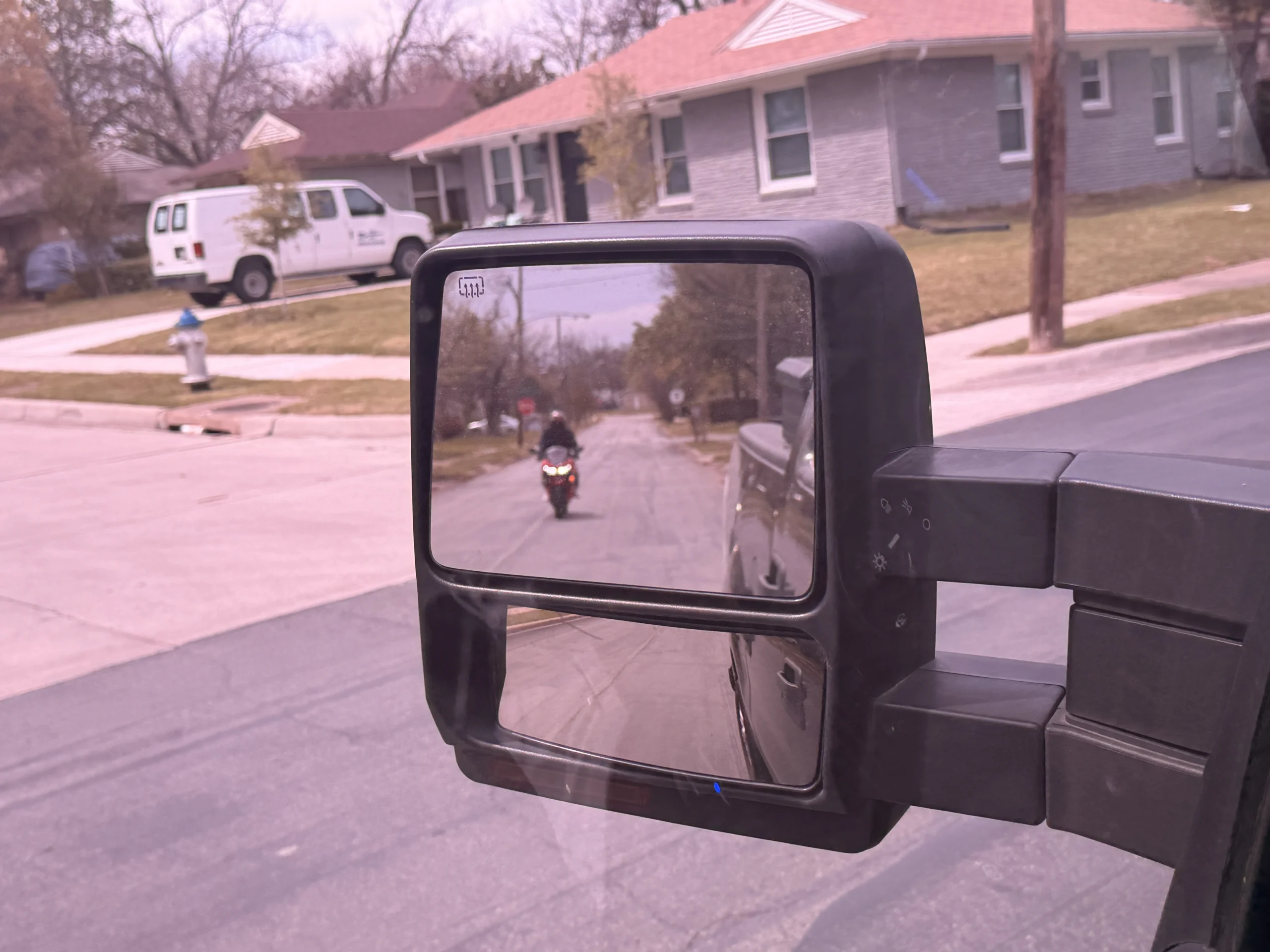
The rearview mirror photograph her client had taken from his motorcycle the night of the stop was the only independent visual record of the scene. It was not enough on its own but it told our investigators exactly where to look.
She called Terrance PI at 9:14 AM on a Wednesday. Our case manager confirmed intake by 10:30 AM. Field operations began Thursday morning.
- The Investigation
Addison Belt Line Corridor: A Motorcycle, A Rearview Mirror, and Three Witnesses in Eight Days
Terrance Private Investigator & Associates structured the investigation around three parallel tracks physical scene analysis, independent witness location, and surveillance camera identification all anchored to the stretch of Belt Line Road where the motorcycle stop occurred. Field operations launched Thursday, March 5, 2026.
Session One — March 5–6, 2026 Physical Scene Analysis — Belt Line at Tollway Interchange
Investigators documented the Belt Line corridor between the restaurant and the stop location mapping sightlines, photographing lane configurations, and evaluating whether a motorcyclist was clearly observable through a driver’s side rearview mirror at night from the caller’s reported position.
The finding was material: the sightline from the caller’s position did not provide a reliable view of the motorcycle at the distance and lighting conditions present at the time of the 911 call.
Session Two — March 6–9, 2026 Witness Canvass — Belt Line Corridor
Late-evening canvassing timed to match the incident hour produced three independent witnesses the prosecution had never contacted; a Belt Line parking attendant, a restaurant server two blocks east, and a westbound couple who had observed the motorcycle head-on rather than through a rearview mirror. Each was asked specifically about the motorcycle’s movement and lane behavior. Each account contradicted the 911 caller’s report. Each witness account was documented with criminal defense court admissibility as the primary standard.
Session Three — March 10–11, 2026 Witness Documentation
All three witnesses were formally documented in compliance with Texas Occupations Code Chapter 1702. The westbound couple’s frontal observation was the most significant; same motorcycle, same moment, directly contradicting what the caller described seeing from behind through a mirror.
Session Four — March 12–13, 2026 Camera Identification and Evidence Package Assembly
Two Belt Line surveillance systems were identified neither in the arrest report. One retained subpoenable footage. The complete evidence package was delivered to Counsel on Friday, March 13, 2026 — 4 days before the hearing on Tuesday, March 17, 2026.
- The Breakthrough
The Sightline That Changed Everything
The case-determinative finding was not the three witnesses though each one was independently significant. It was the physical scene documentation that established what the 911 caller could not have reliably seen from where they were positioned.
A rearview mirror is not a neutral observation point. It is a small, curved, vibrating surface that compresses distance, distorts lateral movement, and reflects ambient light from surrounding traffic. Observing a motorcyclist through a rearview mirror at night on Belt Line Road at speed, in mixed traffic is fundamentally different from observing a car. A motorcycle’s narrower profile and lane positioning behavior can read as erratic to an untrained observer looking backward through a mirror when the same movement would appear entirely routine to anyone watching from the front.
That was what our investigators documented on Belt Line Road.
The scene analysis established that from the 911 caller’s reported position, the sightline to the motorcycle was neither unobstructed nor reliable given the distance, the curvature of Belt Line approaching the Tollway interchange, and the lighting conditions at that hour.
The westbound couple confirmed it from the other direction.
They had seen the same motorcycle head-on… no mirror, no distance compression, no ambient light distortion. Their account of the motorcycle’s movement on Belt Line did not match what the 911 caller described. Two sets of eyes. Same motorcycle. Same moment. Two completely different accounts.
That discrepancy was not interpretation. It was a documented evidentiary conflict the prosecution had no answer for because they had never looked.
“The prosecution’s entire case rested on one witness watching a motorcycle through a rearview mirror in the dark. In eight days, we documented exactly why that was not enough.”
- The Results
Evidence Delivered Before the Hearing. Defense Posture Transformed.
The complete evidence package was delivered to Counsel on Friday, February 14th, four days before the hearing.
It was a documented dismantling of the prosecution’s only independent evidence, one witness, one rearview mirror, one motorcycle on Belt Line Road at night.
The package included:
- Physical scene analysis establishing the 911 caller’s sightline to the motorcycle was neither unobstructed nor reliable
- Three independent witness summaries none contacted by the prosecution each contradicting the caller’s account
- The westbound couple’s frontal observation directly disproving the rearview mirror account that triggered the 911 call
- Two Belt Line surveillance camera systems identified one retaining subpoenable footage the prosecution had never accessed
- A timeline analysis documenting material discrepancies between the officer’s report and independently verified events
“The client rode onto Belt Line Road and into a charge built on one rearview mirror view of a motorcycle in the dark. Eight days later, his attorney walked into Frank Crowley Courts with documented evidence that the view from the front told a completely different story.”
The defense attorney entered that hearing with an evidentiary record that fundamentally challenged the prosecution’s only independent witness. She had it because the investigation was completed in eight days, not two months.
- Key Investigation Evidence
What We Documented
Every element of this Dallas double life investigation was gathered within the bounds of Texas surveillance law, corroborated across multiple sessions, and delivered in a complete attorney-ready evidence package.
KEY INVESTIGATION EVIDENCE What We Documented Across the Addison Belt Line Corridor
Every element of this criminal defense investigation was gathered within the bounds of Texas Occupations Code Chapter 1702, structured for Dallas County criminal court admissibility, and delivered in a complete attorney-ready package four days before the scheduled Frank Crowley Courts appearance.
Rearview Mirror Observation: Belt Line at Tollway Interchange
Physical scene documentation established that the 911 caller’s reported position on Belt Line did not provide an unobstructed or reliable sightline to the motorcycle at the distance and lighting conditions present at the time of the call. A rearview mirror observation of a motorcyclist at night across that stretch of Belt Line, in mixed traffic was documented as an insufficient basis for the erratic driving account that triggered the stop.
Independent Accounts -None Contacted by the Prosecution
A Belt Line parking attendant, a restaurant server, and a westbound couple all observed the motorcycle during the incident window from positions the prosecution never canvassed. The westbound couple’s frontal observation taken head-on rather than through a rearview mirrordirectly contradicted the 911 caller’s account of the motorcycle’s movement and lane behavior on Belt Line Road.
Two Belt Line Surveillance Systems: One With Retained Footage
Two business surveillance camera systems along the Belt Line corridor were identified and documented neither referenced in the arresting officer’s report. One system had overwritten its footage. The second retained footage from the incident date, documented with system type, retention schedule, and business contact information for immediate subpoena action by defense counsel.
Helpful Links
Texas Occupations Code Chapter 1702 — Regulation of Private Investigators in Texas
State Bar of Texas — Criminal Defense Section and Attorney-Investigator Guidelines
Dallas County Criminal Courts — Frank Crowley Courts Building at 133 N. Riverfront Boulevard
Dallas County Criminal Courts — George Allen Courts Building on Commerce Street
Texas Department of Public Safety — Licensed Private Investigator Verification Portal
- Why choose us
Get Answers. Get Results.
Terrance Private Investigator & Associates maintains a verified 5.0 rating across all Dallas County investigations. Criminal defense attorneys throughout the Addison and North Dallas corridor trust us because we build the documented factual record that changes the trajectory of a case before the first argument is made.
This case was not won in a courtroom. It was won on Belt Line Road with a camera, a measuring tape, and three witnesses nobody else had bothered to find.
That is what we do. Eight days. Court-ready. Results. Trusted by Addison and North Dallas criminal defense attorneys for Belt Line corridor DWI and assault cases
- Contact Us
Get Answers. Get Results.
Contact Terrance Private Investigator & Associates
Terrance Private Investigator & Associates maintains a verified 5.0 client rating across all Dallas County investigations earned through documented results, legal compliance, and the professional standard that Dallas County defense attorneys require when a client’s future is on the line.
📧 Email: getanswers@piterrance.com
🌐 Website: https://piterrance.com/
 Call or Text: 214-838-8004
- Our Investigators
Discretion. Experience. Results.
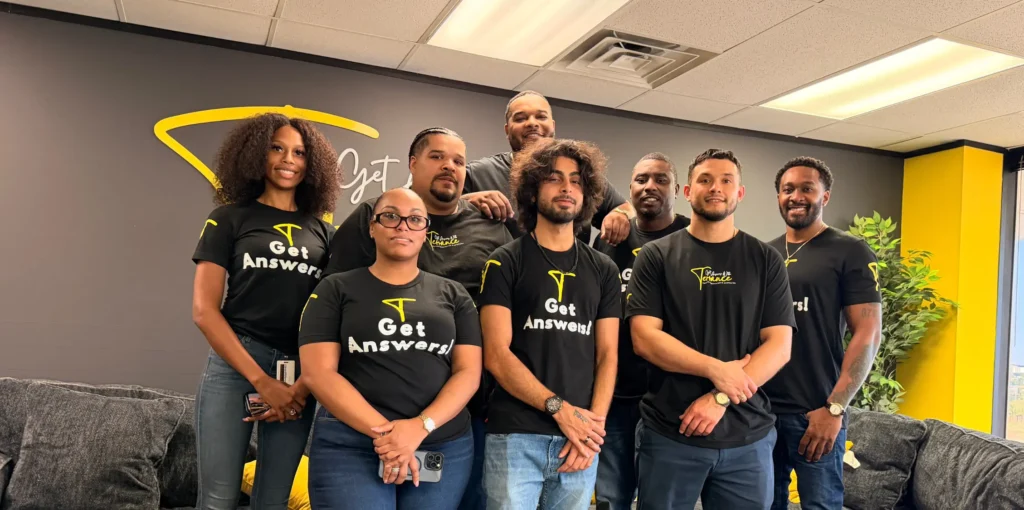
Our investigators are sharp, relentless, and results-driven professionals deeply invested in protecting the clients whose attorneys trust us with their most consequential cases. Every criminal defense engagement is handled with the urgency the timeline demands, the legal precision the courtroom requires, and the professional discipline that protects the integrity of your defense strategy.
- Available 24/7
- Immediate Response
- Clear guidance during difficult moments
- FAQ’S
Common Questions About Hiring a Dallas Private Investigator
How quickly can Terrance PI begin field work on a defense case in Addison or Dallas County?
Criminal defense attorneys who engage Terrance PI at or near case intake consistently produce stronger evidentiary records… In most cases, field operations begin within 24 to 48 hours of attorney case intake. For urgent matters pre-hearing investigations, time-sensitive witness location, or scene documentation before conditions change we can discuss same-day deployment. Call or text us directly at (214) 838-8004. We are available 24 hours a day, seven days a week, and defense cases are handled with the urgency the criminal timeline demands.
Can Terrance PI locate witnesses who were never contacted by the investigating officer?
Yes. This is one of the most high-impact PI engagements in criminal defense and one of the most time-sensitive. Witnesses who were present at or near an incident location and were never interviewed by law enforcement are frequently locatable through field canvassing, skip tracing, and targeted outreach. The sooner we begin, the more likely those witnesses are still available and willing to engage. In the Belt Line case documented here, all three witnesses were located through systematic field canvassing within four business days of intake.
How is physical scene documentation used at a Dallas County criminal trial?
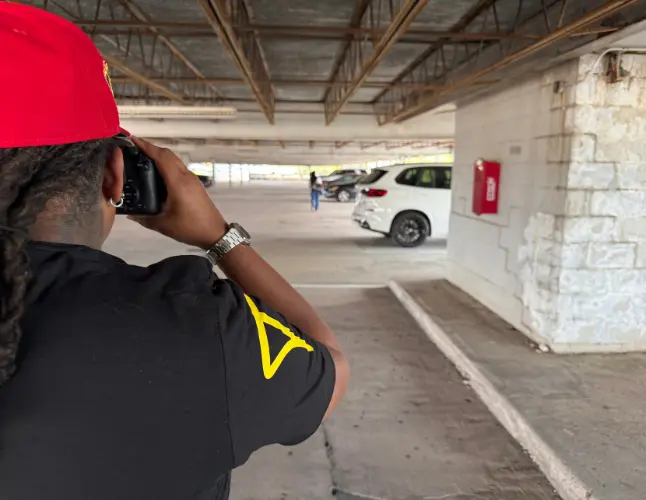
Physical scene documentation photographs, measurements, sightline analysis, signage, traffic infrastructure, camera positions, lighting conditions can directly support or contradict elements of an officer’s report or witness account. This documentation is most powerful when it creates a material discrepancy between what the prosecution claims was observable and what the physical reality of the scene allows. All Terrance PI physical scene documentation is photographically supported, timestamped, and formatted for Dallas County court admissibility.
Does Terrance PI work at the Frank Crowley Courts Building and George Allen Courts Building?
Yes. Terrance Private Investigator & Associates regularly supports criminal defense cases tried at both the Frank Crowley Courts Building at 133 N. Riverfront Boulevard on Stemmons and the George Allen Courts Building on Commerce Street. Our investigators are familiar with the jurisdictional standards, filing requirements, and evidentiary expectations of both Dallas County criminal court facilities. Cases originating in Addison, Farmers Branch, Richardson, Carrollton, and across the North Dallas corridor are regularly tried in both venues.
Will my case remain confidential?
Yes. All investigations are handled discreetly and confidentially. Information is shared only with authorized parties and documented professionally. Trust our Dallas private investigator expertise.
For the best results, consider hiring a reliable Dallas Private Investigator for your needs.
Can Terrance PI identify and document surveillance footage before it is overwritten?
Yes and this is one of the most time-critical PI functions in criminal defense work. Business surveillance systems in Texas typically retain footage for 14 to 30 days before overwriting. Identifying camera systems at or near an incident location and documenting their retention status is a field task that must happen quickly. Terrance PI investigators are trained to identify, map, and document surveillance infrastructure as a standard element of any defense scene investigation and to document the systems in a format that supports a subpoena for footage that is still retained.