Technology Every Modern Investigator Uses
Modern investigations run on far more than a good pair of eyes ...
Defensible claims investigations that hold up when the file gets challenged
1
Insurance companies retain us to establish facts on claims where the documentation is incomplete. Activity level on a disputed disability claim. Whether a reported loss occurred as described. Whether a claimant lives at the address on file or has a claims history that was never disclosed.
We take no position on the outcome. Assignments are worked the same way whether the findings support the claim or undermine it, and both are reported with the same detail. That neutrality is not a courtesy to the claimant. It is what makes the documentation usable, because an investigator who reliably produces the answer the carrier wanted is an investigator whose findings do not survive deposition.
Over 17+ years and more than 800 closed cases, we have built our claims work around three standards: fieldwork performed lawfully in the venue where the claim sits, documentation prepared to evidentiary standards from the first hour, and reporting an adjuster can act on without a follow-up call. Insurance companies working with us for the first time usually start with a single file. What sustains the relationship is that the fortieth file is handled the same as the first.
Experience
2
Assignments are scoped to the exposure, the venue, and what the file needs documented. The services insurance companies request most often:
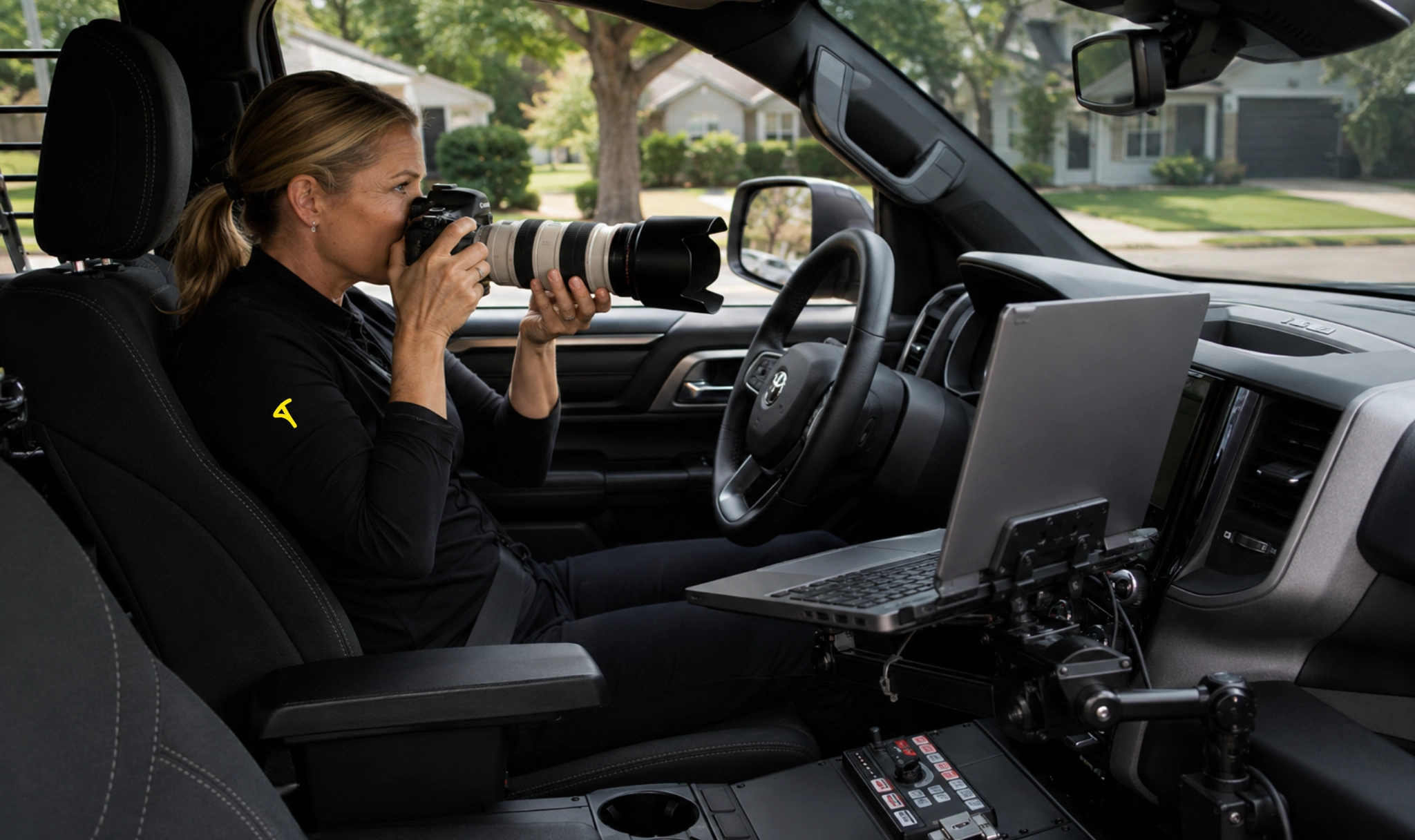
Time-coded video with contemporaneous field notes, observation periods logged whether or not activity is captured.
Recorded statements, scene inspections, neighborhood canvassing, and verification of the facts stated in the loss report.
Current address verification on claimants who have stopped responding and witnesses listed on the original report.
Workers compensation exposure, premises liability, and internal matters requiring a neutral third-party investigator.
Prior claims history, employment verification, and publicly available information gathered lawfully and documented for the file.
Determination of whether a responsible party has recoverable assets before subrogation costs are committed.
Most files that reach us have already been through an activity check that produced nothing usable. Our work is commonly requested by:
3
Modern investigations run on far more than a good pair of eyes ...
If you’re exploring this field, you’ve probably seen the term: a 1099 ...
People often picture a private investigator career as one job—someone in a ...
What makes a great private investigator? It isn’t a gadget, a badge, ...
4
Our field investigators come from backgrounds in law enforcement, military intelligence, insurance claims, and licensed investigative practice, and most have worked claims files for longer than they have worked for us. That experience shows up in the details that matter to a carrier. They know what an independent medical examination window means for scheduling. They know which observation positions produce usable footage and which ones produce forty minutes of a hedge. They know that a report an adjuster cannot act on is not a finished report.
Our investigators hold the licensure required wherever they work and maintain active membership with the National Council of Investigation and Security Services. After 17+ years working with insurance companies nationwide, we assign files based on who has handled that claim type before, not on who happens to be available.
5
Time-coded video, contemporaneous field notes, chain of custody recorded from collection forward. Every file is prepared on the assumption that defense counsel may need to use it.
We report what the evidence establishes, including when it supports the claimant. Findings shaped to fit a preferred outcome do not survive scrutiny and create exposure rather than reducing it.
Most assignments begin within 24 hours of receipt. Status updates are provided during the assignment, not only on delivery.
structured so an adjuster can act on them, complete enough for defense counsel, and written with the understanding that a jury may eventually read them.
A licensed investigator network covering venues nationwide, with the assigned investigator already local to the claim. No travel time billed to the file.
Recurring assignments are handled to the same standard as the first file. Reporting format, documentation practice, and turnaround do not change as volume increases.
6
Send the file and the exposure. You will get an assessment of what investigation can realistically document, what it will cost, and what timeline is achievable in that venue. Where the file does not justify the expense, we will say so before the assignment is opened.
Claims, surveillance, and fraud matters resolved for insurance companies nationwide.
A concerned father wanted to know who his daughter was dating. Our ...
Her family feared the worst. Our missing person investigator Houston team found ...
She thought she knew his life. Our infidelity investigation Houston team spent ...
Below are the questions carriers and adjusters ask most often. If you do not see yours here, contact Terrance Private Investigator & Associates for a confidential consultation.
Most assignments begin within 24 hours of receiving the file. Time-sensitive matters such as an approaching independent medical examination or a closing statutory window can be prioritized. Where a timeline is not achievable in a given venue, we say so before accepting the assignment.
The claim number, subject identifiers and last known address, the loss description, and any activity already documented. Prior surveillance reports are useful even when unsuccessful, because they establish what has already been ruled out.
That is the standard every file is worked to. Video is time-coded, field notes are written contemporaneously rather than reconstructed, and chain of custody is documented from collection forward. Investigators provide declarations and testify when a matter proceeds.
Yes. Insurance companies with multi-state exposure use us for that reason. Every assigned investigator is licensed in the jurisdiction where the work is performed, and licensure is confirmed before fieldwork begins. Reporting format and point of contact remain the same regardless of venue.
Yes. We accept SIU referrals, work alongside internal investigators, and prepare findings so they transfer cleanly into an existing file or a referral to the appropriate authority.
For a file where the documentation is incomplete, contact us to discuss scope, timeline, and cost. Our licensed private investigators support insurance companies, adjusters, and defense counsel nationwide.