When everyone says you’re guilty but your gut says otherwise—here’s what it takes to prove the truth.
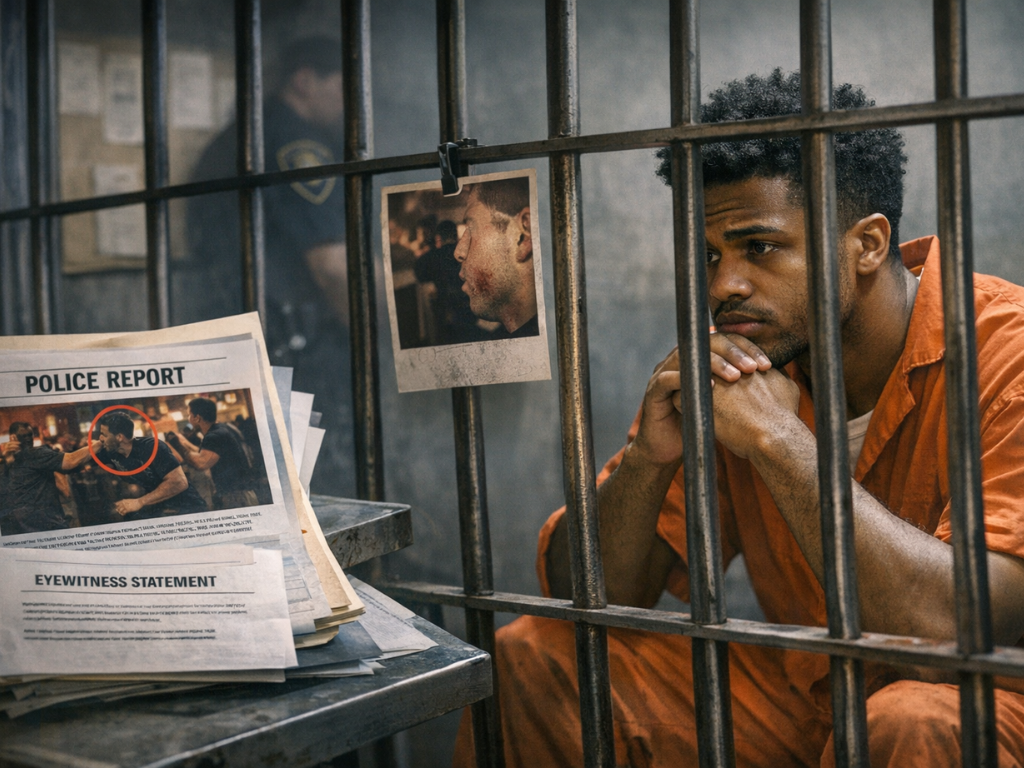
Saving Marcus became our mission when his mother called us at 22 years old. He should have been thinking about his career, his future, maybe where to grab dinner with friends on a Friday night. Instead, he was sitting in a county jail cell, facing five years in prison for something he swore he didn’t do.
One night out in downtown Houston turned his entire life upside down. A bar fight. A fractured jaw. Chaos everywhere. And somehow, Marcus became the guy everyone pointed at.
The prosecutor looked at the case and saw it as simple. Two eyewitnesses said they saw him throw the punch. The victim pointed right at him. Security footage seemed to back it all up. Open and shut, they called it.
But his mother saw something different. She saw her son—the kid who’d never been in serious trouble, who worked full-time, who helped her with groceries every Sunday—sitting in jail because everyone had already decided he was guilty.
“I know my son,” she told us during that first phone call, her voice shaking. “He’s not perfect, but he didn’t do this. And nobody’s listening to me.”
That’s when she found us. Not because she wanted someone to make up a story. She wanted someone to actually look at what happened that night—really look—because nobody else had. Saving Marcus meant finding the truth everyone else had stopped looking for.
What Really Happened That Night
Marcus didn’t deny being at the bar. He was there. He got into an argument with someone he knew—bad blood over an ex-girlfriend, the kind of drama that seems important when you’re 22 but stupid when you look back on it.
There was yelling. There was some pushing. Marcus admits that. But here’s what he was absolutely certain about: he walked away before anyone got seriously hurt.
By the time that jaw got fractured, Marcus was already heading toward the exit. He was done with it.
But the victim said otherwise. And once his name was attached to the case, the investigation basically stopped. Public defender believed him but didn’t have the time or resources to dig deeper. That’s the reality of the system—it’s not built to prove innocence. It’s built to move cases through.
Without our commitment to saving Marcus, he would be in prison right now serving time for someone else’s crime.
The Warning Signs His Family Noticed
If someone you love is sitting in jail swearing they didn’t do what they’re accused of, pay attention to these signs that saving Marcus taught us to watch for:
The story doesn’t add up. Physical evidence doesn’t match what they’re accused of doing.
Police stopped investigating too quickly. Once they had a suspect, they moved on.
Witnesses are vague. “I think I saw” becomes “I’m certain” in official reports.
There’s a personal motive. The accuser had a reason to point fingers at your loved one specifically.
Nobody’s asking the hard questions. Like “What if we got this wrong?”
Marcus’s case had all of these. And his mother’s gut knew something wasn’t right. Saving Marcus meant listening to that gut instinct when everyone else dismissed it.
The Investigation
What Saving Marcus Required Us To Walk Into
Look, we’re not going to sugarcoat this. When we took on saving Marcus, the odds were stacked against him. The state had two eyewitnesses who’d given statements under oath. They had a victim with a serious injury—jaw fractured in two places. And they had video that seemed to show Marcus right there when it happened.
On paper, it looked bad. Really bad.
But here’s what we’ve learned doing this work for years: “on paper” isn’t the same as “what actually happened.” Cases that look open and shut often fall apart when someone takes the time to ask the questions nobody else bothered with.
The challenge of saving Marcus wasn’t just finding the truth. It was finding it after everyone had already made up their minds.
Starting From Scratch
We didn’t start by asking “Did Marcus do it?” We started by asking “What didn’t anyone look at?”
Think about it. When police investigate a bar fight and they get a name, a victim who points a finger, and some witness statements, they often call it done. They’ve got a case. They move on. But what about the cameras they didn’t check? The witnesses they didn’t interview? The timeline they didn’t reconstruct?
That’s where saving Marcus began.
Finding What Everyone Missed
The Camera Nobody Checked
Police reviewed the main security camera—the one behind the bar. It showed the argument. It showed Marcus and the victim face to face. It showed chaos.
But our team working on saving Marcus went back to that bar three separate times. We mapped every single camera angle. And we found something: the place had four additional cameras that police never requested footage from.
Why? Because they thought they had enough. That’s tunnel vision, and it destroys innocent lives.
We got footage from every camera, including one mounted near the entrance that nobody had bothered with. When we slowed it down frame by frame, everything changed. This footage became critical to saving Marcus.
You could see Marcus and the victim arguing. You could see Marcus put his hands up in a “back off” gesture. You could see him turn and start walking toward the exit.
And then—here’s the part that matters—you could see a third guy step in from the side. Someone nobody had even mentioned. Marcus is already six feet away, walking off, when this other guy throws the punch that breaks the jaw.
The punch didn’t come from Marcus. It came from someone else entirely, and it was right there on video the whole time.
What The Witnesses Actually Saw
Next part of saving Marcus: we re-interviewed the eyewitnesses. Not to attack them, but to actually understand what they saw versus what they assumed.
Here’s the thing about witness testimony—it’s notoriously unreliable in chaotic situations. People see bits and pieces, their brain fills in the gaps, and suddenly they’re “certain” about something they actually only assumed.
Under careful questioning during our work saving Marcus, both witnesses admitted they never actually saw the punch land.
Witness one said: “I saw them arguing. I saw the guy fall back holding his face. I just figured it was Marcus because they’d been fighting.”
Witness two: “Everything happened so fast. There were like five or six people all crowded together. I saw Marcus yelling and then the other guy was on the ground. I thought… I mean, I assumed he hit him.”
Assumed. That word right there is the difference between saving Marcus and watching him go to prison for someone else’s crime.
Both witnesses signed revised statements clarifying they didn’t actually witness Marcus throw the punch.
The Story Nobody Investigated
As we dug deeper while saving Marcus, we found something prosecutors had completely ignored: Marcus and the victim had history.
They were romantic rivals. The victim had been harassing Marcus for months over a shared ex-girlfriend. Text messages. Social media posts. Even a previous police report Marcus had filed about the harassment.
Suddenly, the finger-pointing made perfect sense. When the victim got hurt that night, he saw an opportunity to use the legal system to get back at someone he already hated.
That motive should have been investigated from day one. But it wasn’t, because once police had their suspect, they stopped looking. Saving Marcus meant uncovering the context everyone else ignored.
When Medical Evidence Tells The Truth
We brought in a forensic medical expert for saving Marcus. His job was simple: look at the injury and tell us if it matched Marcus’s position and physical capabilities.
Bone doesn’t lie.
The expert analyzed the fracture angle, the force required, the direction of impact, everything. His conclusion was clear: based on where Marcus was standing and the injury pattern, it was biomechanically impossible for him to have delivered that blow.
The fracture matched the height and position of the third man from the video—the one police never even looked for. This medical evidence became crucial to saving Marcus.
The Social Media Confession
Finally, our team working on saving Marcus did what investigators should always do: we checked social media.
The real assailant—the third guy from the video—posted on Instagram at 1:47 AM that same night: “Dude at the bar tonight learned not to run his mouth. Some people need to get checked.”
The timing. The context. Combined with our video evidence, it was basically a confession.
We also found he had two prior assault charges and a history of bar fights documented across his social media.
How did police miss this? Because once they had Marcus, they stopped investigating. That’s exactly what made saving Marcus necessary in the first place.
Putting It All Together
Our investigation into saving Marcus included:
Complete video evidence from all five cameras showing Marcus walking away before the punch
Revised witness statements clarifying they never saw the actual assault
Forensic medical analysis proving the injury couldn’t have come from Marcus based on positioning and biomechanics
Social media evidence pointing directly to the actual assailant
Background investigation revealing the victim’s motive to falsely accuse Marcus
Timeline reconstruction showing exactly when Marcus left the area
Identification of the real assailant with supporting criminal history
Page by page, we dismantled what everyone thought was an “open and shut” case. Saving Marcus required proving not just that he didn’t do it—but that someone else did.
The Result
How Saving Marcus Became Reality
We delivered our findings to the DA’s office on a Thursday morning. By Friday afternoon, the prosecutor who’d been pushing for five years called Marcus’s attorney.
“We’ve reviewed the private investigation materials,” he said. “We’re dismissing all charges.”
Just like that. No trial. No plea deal. Complete dismissal. Saving Marcus was complete.
All charges dismissed. Felony aggravated assault charge dropped entirely based on our evidence.
Immediate release. Marcus walked out of Harris County Jail within 48 hours.
Record expunged. All arrest records sealed and removed from his permanent record.
Real assailant identified. Our work in saving Marcus led police to investigate the actual perpetrator.
Future protection. The false accusation is now documented, protecting Marcus from any future claims.
What His Attorney Said About Saving Marcus
Marcus’s defense attorney pulled us aside after the dismissal. “I’ve been doing this for 18 years,” he said. “I’ve seen maybe three or four cases where someone was this clearly innocent—and usually, they still end up taking a plea because they can’t prove it. Your work didn’t just create reasonable doubt. You proved he didn’t do it. You proved someone else did. That almost never happens.”
That’s the difference saving Marcus made—and what we strive to do in every case.
Marcus Today
Two weeks after getting out, Marcus met with us. “I can’t even describe what it’s like,” he said. “One day you’re facing five years for something you didn’t do. Everyone believes you’re guilty—even people who’ve known you your whole life start to doubt you. And then it’s just over. Because someone finally looked at what really happened.”
He’s back at work now. Back with his family. Back to his normal life.
But here’s what stuck with him about saving Marcus: “If my mom hadn’t found you, I’d be in prison right now. The public defender believed me, but he didn’t have the resources to do what you did. The system isn’t built to prove innocence—it’s built to move cases through. Without you, I would’ve been just another statistic.”
That’s exactly why saving Marcus mattered so much to us—and why we do this work.
Why This Matters
When Innocent Until Proven Guilty Isn’t Enough
Here’s the truth about the criminal justice system: you’re innocent until proven guilty, but proving innocence takes evidence. Real, physical, documented evidence.
In cases like saving Marcus, we see it constantly. Police stop investigating once they have a suspect. Public defenders don’t have resources for deep investigation. Prosecutors build cases on assumptions. Witnesses fill memory gaps with guesses.
Without professional help, innocent people go to prison. Saving Marcus required resources and expertise that most families simply don’t have access to.
What Saving Marcus Actually Took
The work of saving Marcus provided:
Independent evidence gathering that finds what police missed
Forensic analysis of medical, digital, and video evidence
Professional witness re-interviews that reveal inconsistencies
Alternative suspect identification when the real perpetrator is still out there
Minute-by-minute timeline reconstruction
Court-admissible expert reports
Evidence strong enough that prosecutors dismiss charges before trial
What Was Actually At Stake
When someone’s falsely accused, the consequences go way beyond potential jail time. We’re talking about job loss, destroyed relationships, eviction, ruined education, mental health crises, financial destruction, and a permanent record that haunts every background check.
In saving Marcus, we prevented him from losing five years in prison, over $250,000 in lost wages, a felony record that would have followed him forever, and the inability to vote, find housing, or get decent employment for the rest of his life.
The life impact of saving Marcus: incalculable.
What To Do If This Is Happening To You
Don’t Talk Without A Lawyer
First rule in cases like saving Marcus: anything you say will be used against you, even if you’re innocent.
Don’t think “if I just explain, they’ll understand.” Don’t think “I have nothing to hide.” Don’t think “asking for a lawyer makes me look guilty.”
Invoke your right to remain silent. Request an attorney immediately. Do not consent to searches. Document everything.
Document Everything Right Now
Your documentation becomes critical evidence—just like it did in saving Marcus.
Write down your account immediately while memory is fresh. Screenshot all communications with the accuser. Note your exact timeline—where you were, when, with whom. List every witness who can back up your story. Preserve digital evidence like GPS data and transaction records.
Get Professional Help Immediately
Time is your enemy in false accusation cases. Security footage gets deleted in 7-30 days. Witnesses forget or disappear. Digital evidence gets overwritten. Physical evidence degrades. Meanwhile, the prosecution builds their case.
Saving Marcus required immediate action. Your case does too.
Contact a licensed private investigator who specializes in criminal defense investigation. In Texas, all investigators must be licensed under the Texas Occupations Code.
When You Know The Truth But Nobody’s Listening
Every day that passes is another day evidence disappears. If you’re facing charges for something you didn’t do, if your family knows you’re innocent but the system won’t listen, don’t wait for justice to somehow find you.
The justice system isn’t designed to prove innocence. It’s designed to process cases efficiently. Without someone actively fighting for the truth, innocent people go to prison every single day. Saving Marcus required someone willing to look beyond the surface—your case needs the same commitment.
Get Answers. Get Results.
Terrance Private Investigator & Associates
We specialize in criminal defense investigation. We have law enforcement backgrounds. We conduct forensic evidence analysis. We’re available 24/7 for emergency cases. We produce court-admissible reports. We provide expert witness testimony when needed.
Just like saving Marcus, we find what police missed. We prove what prosecutors assumed. We give you the evidence that makes charges disappear.
Emergency Consultation:Criminal Defense Investigation Services
Email:getanswers@piterrance.com
Website:https://piterrance.com/
Legal Resources:Texas Criminal Defense Lawyers Association
Your freedom shouldn’t depend on an incomplete investigation. Saving Marcus proved what’s possible when someone takes the time to find the truth. Let us do the same for you.
Licensed in Texas. Fully confidential. Available 24/7 for emergency criminal defense investigations.
Helpful Resources links
Victim Connect Resource Center
The Innocence Project
URL:https://innocenceproject.org/Relevance: National organization dedicated to exonerating wrongly convicted individuals through DNA testing and reforming the criminal justice system.
Terrance Private Investigator & Associates handles domestic investigations with discretion and compassion.
Terrance P.I.