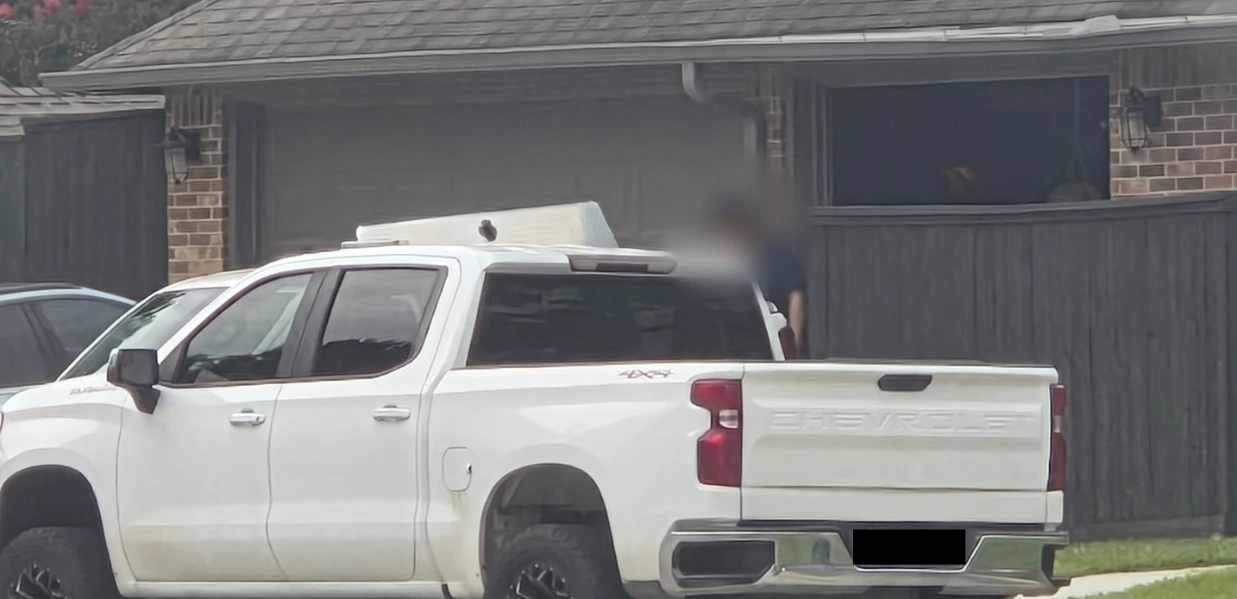

CASE OVERVIEW
What Darius brought us was not a suspicion. It was a pattern everyone around him had already seen, and he needed it documented before his next court date.
Darius had been hearing the same thing from multiple people for long enough that he could no longer dismiss it as rumor. His son was not being raised by his mother. His ex-wife had, child custody ordered by the Harris county courts but according to everyone who had been close enough to see it firsthand, handed their son off to her parents and largely disappeared from the picture. The boy was living with his maternal grandparents. The grandparents were the ones getting him to school in the mornings. The grandparents were the ones showing up to his activities. The grandparents were keeping the household running for a child who deserved a parent doing that, not a set of grandparents filling in for one who was not there.
In a custody proceeding, what you believe and what you can prove are two different things, and believing that your ex-wife has effectively abandoned her parental responsibilities while continuing to hold primary custody is a very different thing from having a documented record that establishes it. Darius came to Terrance Private Investigator and Associates because he needed the documented record. He needed to know with certainty who was responsible for his son’s daily life, and what his ex-wife’s actual involvement looked like when no one was performing for a court.
Our investigators found exactly what Darius had been told. The grandparents were raising his son. The mother appeared at her parents’ residence exactly once during the entire investigation window, for approximately fifteen minutes, before leaving again. Everything else belonged to two grandparents who were doing the work of a parent because the parent was not there to do it.
Client name and identifying details have been changed. This case study is published with permission.
THE CHALLENGE
The investigation had to document the absence as clearly as the presence, and it had to do that across enough days that the pattern could not be explained away.
Child custody investigations involving allegations of parental absence present a specific investigative challenge. The subject parent may still maintain a legal address at the custodial residence and present an appearance of involvement when court appearances require it. The investigation has to document not what the subject parent claims their involvement to be but what it actually looks like across an ordinary week, when no one is performing for an audience.
Documenting the positive, meaning who was present and what they were doing, is the straightforward half of that task. Documenting the negative, meaning who was absent across the full scope of a child’s weekly routine, requires observing enough categories of parental activity across enough consecutive days that the absence becomes a documented pattern rather than a single instance that could be characterized as unusual or temporary.
Our investigators needed to establish who was actually functioning as the primary caregiver on a daily basis, document the mother’s actual presence and parenting participation across the investigation window, build a complete picture of the child’s daily and weekly routine including school, church, and other activities, and produce a record thorough enough to support a legal assessment of whether the custodial arrangement still reflected the mother’s actual involvement or whether primary care had effectively transferred to a third party without court authorization.
THE INVESTIGATION
Every school morning, every Sunday at church, and every errand and outing observed: the grandparents were there and the mother was not.
The investigation documented both what was present and what was absent across the full operational window. Our investigators covered the school routine, the weekend routine, the household pattern at the grandparents’ residence, and every other category of observable parental activity that appeared during the investigation period. Here is what that documentation produced.
The school mornings established the caregiving baseline before the first week was done
The most reliable window into a child’s actual caregiving arrangement is the school drop-off. It happens every weekday morning, it is observable, and it reflects the domestic reality of who is responsible for getting a child ready and out the door at a specific time each day. For Darius’s son, that responsibility belonged entirely to his maternal grandparents.
Our investigators documented the school drop-off across multiple mornings of the investigation window. The grandfather brought the child to school on some mornings. The grandmother brought the child to school on others. Both grandparents were observed in that role across the documented period, establishing the school routine as a shared grandparental responsibility rather than an occasional substitute arrangement. The mother was not observed at the school at any point during the investigation. She did not drop her son off. She did not pick him up. She did not appear in the school parking lot or at the school entrance during any observed period of the investigation.
The regularity of the grandparents’ presence and the complete absence of the mother’s presence was documented across every school day of the operational window. A child whose primary custodial parent is involved in their school life appears at school with that parent on a consistent basis. Darius’s son appeared at school with his grandparents on a consistent basis. That distinction is not subtle and it is not ambiguous.
Sundays at church and the rest of the week told the same story the school mornings had already established
Our investigators documented the family’s Sunday routine, which included attendance at a church in the Houston area. The pattern was identical to what the school mornings had already established: the grandparents took the child to church, attended the service with him, and departed with him. The mother was not present.
Across the broader week, our investigators also documented additional activities and outings involving Darius’s son and his maternal grandparents: errands, recreational activities, and the ordinary texture of a child’s life that fills the time between school and bedtime. In every observed instance, the adults responsible for Darius’s son were his grandparents. Both grandparents were present throughout, and the mother was not. The picture was consistent across every day and every type of activity observed during the investigation window, and consistency across multiple categories of parental activity is what separates a documented pattern from an isolated observation.
The fifteen-minute visit and what it confirmed about everything else
The most significant single observation of the entire investigation was also the briefest. The mother appeared at her parents’ residence once during the full investigation window. She was observed arriving, remaining for approximately fifteen minutes, and departing. She was not observed engaging in any extended parenting activity during that visit. She left without her son.
Fifteen minutes. In the entire documented investigation window, the mother was present in her son’s primary living environment for a duration that would not cover a school pickup, a shared meal, or a homework session. The visit did not constitute parenting in any documented sense. The arrival time, duration, and departure were all logged. What was absent from the log was any activity during those fifteen minutes consistent with active, involved parental engagement.
The fifteen-minute visit did not contradict the pattern the investigation had established; it confirmed it. A primary custodial parent does not appear at their child’s home for fifteen minutes in a week and constitute an involved presence in that child’s daily life. The documented record made that plain.
What the investigation produced
Everything below was documented across the operational period and appears in the report delivered to Darius with supporting evidence.
- Daily school drop-off and pickup by maternal grandparents. Both the grandfather and grandmother were documented in the school drop-off role across multiple mornings of the investigation, establishing the school routine as a consistent shared grandparental responsibility.
- Sunday church attendance documented. The grandparents were observed transporting the child to church, attending with him, and returning home with him. The mother was not present on any documented Sunday.
- Additional activities and outings throughout the week. Errands, recreational activities, and other outings throughout the investigation window were observed with the grandparents as the responsible adults in every instance.
- Complete absence of the mother from the child’s school and activities. The mother was not observed at the school, at church, or at any other observed activity during the full investigation window.
- Mother observed at residence once, for approximately fifteen minutes. The single observed visit by the mother to her parents’ residence was documented with arrival time, duration, and departure. She departed without her son. No extended parenting activity was observed during the visit.
- Complete investigative report delivered. Darius received a professionally organized report covering every documented finding across the investigation window, with the specificity required to support a legal assessment and a custody modification proceeding.
HOW THE EVIDENCE HELPED
What Darius, his attorney, and the family court could each do with a documented record of who was actually raising this child.
The gap between what a custody order says and what a child’s daily life actually looks like is a gap that verbal accounts cannot close on their own. Multiple people had told Darius what was happening with his son. His attorney could represent that in court, and the opposing party could dispute it, and the court would be left with a credibility question rather than a factual record. A documented investigative report changes the nature of that proceeding entirely.
Darius’s attorney received a complete surveillance report covering every school morning observed, every Sunday at church, every other activity documented during the investigation window, and the single fifteen-minute visit by the mother, logged with arrival time, duration, and departure. Texas family courts can modify custody when there has been a material and substantial change in circumstances since the original order was entered. A documented pattern in which the primary custodial parent is absent from the child’s school routine, weekend activities, and daily life, and appears at the child’s residence once for fifteen minutes across an entire investigation window, is a factual record of exactly that kind of change. It is not a characterization of the mother’s parenting that can be disputed as unfair or selective. It is a timestamped log of what was actually observed.
Darius received something beyond the legal utility of the file. He received the particular clarity that comes from having your own knowledge confirmed by someone who had no reason to favor any outcome. He had known his son needed him. What the investigation gave him was the form that knowing needed to take in a courtroom. When he closed the folder, he said: “I knew he needed me. Now I can show it.”
THE RESULTS
The grandparents were raising Darius’s son. The documented record confirmed it across every observed day of the investigation.
The investigation produced a complete documented record that confirmed every element of what Darius had been told about his son’s situation. The maternal grandparents were the exclusive adults responsible for the child’s school routine, church attendance, and all other observed activities across the full investigation window. The mother was not observed at the school or at any other observed activity during the investigation, and appeared at her parents’ residence once, for approximately fifteen minutes, before departing without her son.
Darius received the complete file. His attorney received the complete file. The custody modification proceeding moved forward with a documented record of the child’s actual living situation rather than a verbal account that the opposing party could dispute. In our experience, the parents who wait until they are certain they have enough to justify a custody investigation are frequently the ones who lose time they could not afford to lose. The time to document a child’s actual situation is while the pattern is current, while the documentation is fresh, and before the next court date arrives without the factual record that could have changed the outcome.
WHY CHOOSE US
Seventeen years of documented casework. Founded in 2009, with more than eight hundred cases closed across Houston, Dallas, Austin, San Antonio, Miami, and Atlanta.
We document the absence as carefully as the presence. In parental absence investigations, what is not observed is as significant as what is. Our investigators document every category of parental activity, school routines, weekend outings, religious attendance, household observation, specifically so that a court can see the full picture of who is and who is not showing up in a child’s daily life.
Reports built for family court. Our findings are organized by date, location, and specific observation, timestamped throughout, and structured for the family law attorneys and judges who will receive them.
We work on both sides of custody disputes. We have produced custody surveillance on behalf of mothers, fathers, and parties on both sides of modification proceedings. The standard is always the same: complete, honest documentation of what our investigators actually observe.
Urgency matched to the situation. Custody cases have court dates. We respond quickly, deploy quickly, and deliver the complete file with enough lead time for your attorney to use it effectively.
Licensed and accountable. Texas DPS License A30913601, with investigators operating across six metro markets.
CONTACT US
Ready to replace what others have told you with a documented record that holds up in court?
If you have reason to believe your child’s primary custodial parent is not the one actually raising them, or if you have been told by multiple people close to the situation that the daily care of your child has effectively been transferred to someone else, our investigators can build the documented record that gives your attorney something to work with. A confidential consultation costs you nothing and will tell you whether a professional investigation makes sense for your situation.
Call (832) 404-3400 or submit your case below. Everything you tell us stays between us.
getanswers@piterrance.com
piterrance.com/new-case-request/
FREQUENTLY ASKED QUESTIONS
What is a parental absence child custody investigation Houston case?
A parental absence child custody investigation Houston case is a professional surveillance operation in which our investigators document the actual daily caregiving arrangement for a child whose primary custodial parent is alleged to be absent or uninvolved. The objective is to establish through direct observation who is actually responsible for the child’s daily routine and what the custodial parent’s involvement looks like when no court appearance is requiring them to perform it.
Can an investigation document that grandparents are raising a child instead of a parent?
Yes, and this case is the evidence. Our investigators documented the maternal grandparents as the exclusive adults responsible for the child’s school routine, church attendance, and all observed activities across the investigation window. The mother was observed at the residence once, for fifteen minutes. That documented contrast is exactly the kind of finding a family court needs to assess whether a custody modification is warranted.
Can investigative findings support a custody modification in Texas family court?
Texas family courts can modify custody when there has been a material and substantial change in circumstances since the original order was entered, and a documented pattern of parental absence qualifies as exactly that kind of change. We recommend consulting with a Texas family law attorney about how the specific findings in your case apply to your modification proceeding.
How long does a parental absence custody investigation typically take?
A week or two of surveillance covering school mornings, weekend activities, and evening observation at the residence is typically sufficient to establish a documented pattern that cannot be dismissed as an atypical week. We assess each case individually at intake and give every client an honest account of what the investigation can realistically produce.
What if the absent parent claims they were temporarily unavailable during the investigation window?
A documented pattern across multiple days and multiple categories of parental activity is considerably harder to dismiss as temporary than a single observed incident. Our investigators document school routines, weekend activities, church attendance, recreational outings, and residence observation across the full operational period so that the record reflects a consistent pattern rather than a snapshot.
How do I start a child custody investigation with Terrance PI?
Call or text our team at (832) 404-3400, email getanswers@piterrance.com, or submit your case at piterrance.com/new-case-request/. We respond quickly and handle every inquiry with complete discretion.
Resources and Guides
- Child Custody Investigations — An overview of how our investigators approach custody surveillance cases, parental absence documentation, and parental fitness investigations.
piterrance.com/services/custody-investigations/ - Surveillance Investigations — How our surveillance operations are planned, executed, and documented for family court contexts.
piterrance.com/services/surveillance-investigations/ - Who We Serve: Individuals — Information for parents navigating custody disputes, modifications, and parental absence situations.
piterrance.com/who-we-serve/individuals/ - Who We Serve: Lawyers — How we work with family law attorneys to produce investigation findings structured for custody proceedings.
piterrance.com/who-we-serve/lawyers/ - Closed Cases: Custody — Additional case studies from our child custody investigation files.
piterrance.com/case-category/custody-cases/ - Start Your Case — Submit your case through our secure intake form.
piterrance.com/new-case-request/ - Texas Family Law Foundation
Resources and referrals for individuals navigating Texas family court, divorce proceedings, property division, and custody matters related to marital breakdown.
https://www.txfamilylawfoundation.org/ - State Bar of Texas — Find a Lawyer
Search for licensed Texas family law attorneys in your area who specialize in divorce, property division, spousal support, and infidelity-related legal matters.
https://www.texasbar.com - Texas Attorney General — Child Support Division — Resources on custody orders, modifications, and enforcement in Texas family court.
https://www.texasattorneygeneral.gov/child-support - Psychology Today — Find a Therapist — Search licensed counselors in Houston specializing in co-parenting conflict and supporting children through custody transitions.
https://www.psychologytoday.com/us/therapists - American Association for Marriage and Family Therapy (AAMFT) — Find a licensed therapist specializing in family restructuring, parental absence, and custody disputes involving third-party caregivers.
https://www.aamft.org/Directories/Find_a_Therapist.aspx