CASE OVERVIEW
A Heavy-Duty Truck, a Waiting Client, and a Question Only a Test Ride Could Answer
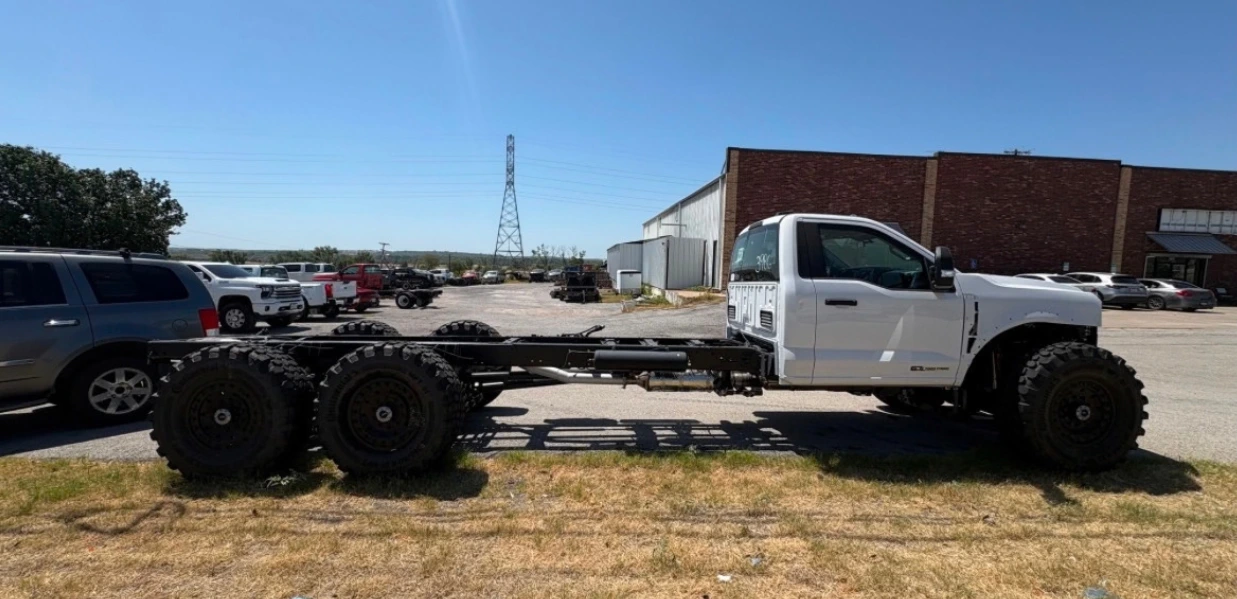
Some asset recovery cases begin with a missing item, and others begin with an item that exists on paper but has never been confirmed by anyone the client trusts. This one began with a heavy-duty six-wheel-drive work truck in the Dallas-Fort Worth area and a client who needed to know, with certainty, that the truck was where it was supposed to be and that it could do what it was supposed to do.
Our client had a photograph in the case file and a set of expectations about the vehicle, yet none of that counted as proof. A photograph does not show whether a drive system engages, and a verbal assurance does not show whether every light on the back of a truck actually works. Our client asked us to go and look, and then to record what we saw.
We sent our investigators to the business location where the truck was kept. Over the next week we met a staff member who promised to pass along our paperwork, learned that the subject was away on personal travel, found a second vehicle parked in front of the truck, and watched a production manager walk into the middle of our inspection. Every one of those moments went into the file.
This case study walks through what we did, what we recorded, and why a short ride in the cab of a truck ended up carrying more weight than a stack of paperwork.
This case study is published with permission. All names, locations, and identifying details have been changed to protect the privacy of everyone involved, and every party is referred to by role only.
THE CHALLENGE
Confirming What Exists and What Works Without Relying on Anyone’s Word
In asset recovery work, the hardest moment is often the one before recovery begins, when everyone needs to agree on what the asset is and what condition it is in. Our client did not have that agreement. The truck was a specialized machine, and its usefulness depended on features that can be demonstrated only in person, including the six-wheel-drive system and the lighting on the rear of the vehicle.
The challenge was both practical and delicate. We needed to reach the vehicle without escalating anything, we needed the cooperation of people who had no obligation to help us, and we needed video that would stand up to scrutiny from anyone who later questioned what we saw. A vehicle authorization form had to be delivered to the right person, and the right person was not in the building when we first arrived.
Timing added further pressure to an already delicate visit. Our subject was away on personal travel during our first visit and was not expected back for several days, which meant the most important part of the inspection could not happen until the following week. We used that gap to document everything we could, and we prepared to return.
THE INVESTIGATION
How Our Investigators Documented the Truck Across Two Visits
The First Visit: Locating the Truck and Leaving the Paperwork
Our investigators arrived at the business location in the afternoon and spoke with a staff member at the front. The staff member explained that the subject was out of the office on personal travel, would return at the beginning of the following week, and would be available to meet with our investigator that Tuesday. We left the vehicle authorization form and our card with the staff member, who said the paperwork would be forwarded to the subject. That exchange was courteous and brief, and it gave us a documented point of contact and a documented date for the next step.
While we were on site, our investigator also recorded a full video of the truck. That recording became the baseline for everything that followed, because it fixed the vehicle’s appearance and location on a specific afternoon before anyone had a reason to move or change anything.
The Second Visit: Meeting the Subject Face to Face
A week later, at about one thirty in the afternoon, our investigator returned to complete the inspection. The subject met with our investigator in person, and a production manager who had stepped into the area introduced himself and explained his role at the business. Shortly afterward, a truck that had been parked in front of the vehicle was moved, which cleared the way for the inspection to continue. Our investigator had asked for two specific things, which were proof that the six-wheel-drive system was working properly and proof that the tail lights were working properly.
The Ride-Along: Testing the Truck in Motion
The most useful piece of evidence in this case came from the cab. Our investigator rode with the subject and recorded video while the truck was driven, which allowed us to document the six-wheel-drive system performing under real movement instead of relying on a description of how it ought to behave. We also recorded the tail lights operating as part of the same inspection. Our investigator observed both systems functioning properly, and the recordings preserve that observation in a form that anyone can review.
What the investigation produced
- Client reference photograph. A photograph placed in the case file on September 10, 2026, used to identify the vehicle before our first visit.
- Initial site video. Two video files (IMG_9831.mov and IMG_9830.mov) uploaded on September 29, 2026, recording the Ford F-550 on our first visit.
- Contact and delivery record. Field notes documenting delivery of the vehicle authorization form and our card to a staff member who agreed to forward them to the subject.
- Return visit video. Four video files (IMG_9868.mov, IMG_9867.mov, IMG_9866.mov, and IMG_9860.mov) uploaded on October 6, 2026, covering the inspection and the ride-along.
- Inspection photograph. One image (IMG_9863.jpeg) uploaded on October 6, 2026, from the return visit.
- Six-wheel-drive verification. Video documentation that the 6×6 system operated properly while the truck was driven during the ride-along.
- Tail light verification. Video documentation that the tail lights operated properly during the same inspection.
- Final case report. A complete chronology, findings, conclusion, and signed investigator declaration that the evidence was collected and preserved in the ordinary course of a lawful investigation.
HOW THE EVIDENCE HELPED
Why Video From the Cab Carried More Weight Than a Promise
Evidence in an asset case has to answer questions that have not been asked yet. Our recordings answer the obvious ones, which are whether the truck exists, where it was, and whether it works, and they also answer the quieter ones about who was present, what was said, and when each moment happened. Because the first video was recorded on one visit and the inspection was recorded on another, our client now holds a dated record of the truck at two points in time.
We do not ask our clients to trust a promise, a photograph, or a conversation when we can put the proof on video from inside the cab.
The ride-along mattered more than anything else we recorded. A written assurance that a drive system works is only a sentence, while a recording made from inside the cab shows the system working while the truck moves. We believe the strongest proof is the kind that does not depend on anyone’s memory or goodwill, and this recording does not.
The way we gathered it also protected everyone involved. The subject cooperated, the people on site were treated respectfully, and our investigator documented the visit without conflict, which means our client can rely on the findings without wondering how they were obtained.
THE RESULTS
A Verified Asset and a Record That Stands on Its Own
The investigation closed successfully. Our investigators confirmed the truck’s presence, recorded it on video, and verified through an in-person ride that the six-wheel-drive system and the tail lights were functioning properly, so our client received exactly the proof requested.
What began as a question about a single truck ended with a documented answer that does not depend on rumor, memory, or paperwork alone. Our client now knows what the vehicle is, where it was, and how it performs, and our team stands behind every frame of that recording. Clarity begins with facts, not assumptions.
Why Choose Us
Seventeen years of documented casework. Founded in 2009, with more than eight hundred cases closed across Houston, Dallas, Austin, San Antonio, Miami, and Atlanta.
Verification that survives scrutiny. Our investigators record dated video and keep an evidence log for every file, so what we observed can be reviewed by clients, attorneys, and anyone else who needs to rely on it.
Respectful field work. We approach businesses and individuals with courtesy, deliver paperwork properly, and keep every interaction calm, which protects the case and the people in it.
Dallas-Fort Worth reach with a Houston base. Our investigators work in the Dallas-Fort Worth market as part of our six-market footprint, so a client in North Texas receives the same standards as a client in Houston.
Hands-on inspection, not secondhand reports. We go to the asset, we look at it in person, and we test what can be tested, because a description is never a substitute for observation.
Licensed and accountable. Texas DPS License A30913601, with investigators operating across six metro markets.
Start Your Asset Recovery Case
If you need proof about a vehicle, equipment, or another valuable asset, our investigators can begin by listening to what you know and what you need to be able to show.
Phone: (832) 404-3400
Toll-free: 833-495-0003
Email: getanswers@piterrance.com
Case request: piterrance.com/new-case-request/
Resources
Internal resources
- Surveillance Investigations
- Background Checks
- Who We Serve: Individuals
- Who We Serve: Lawyers
- Start Your Case
- Asset Investigations
External resources
- State Bar of Texas: Find a Lawyer
- Texas Department of Motor Vehicles
- Texas Attorney General: Consumer Protection
- Texas DPS Private Security Program
- National Insurance Crime Bureau
Frequently Asked Questions
What is an asset recovery investigation?
An asset recovery investigation locates, verifies, and documents property that matters to a case, such as vehicles, equipment, or other valuables. Our investigators confirm where the asset is, what condition it is in, and who has control of it, and then we record those facts in a form our clients and their attorneys can use.
Can a private investigator verify that a vehicle works?
Yes, within the limits of what the owner or custodian allows. In this case our investigator met with the subject in person and recorded video during a ride-along that showed the six-wheel-drive system and the tail lights working properly.
Why does video evidence matter in an asset case?
Video fixes what an investigator observed on a specific date, and it does not depend on anyone’s memory. It can support negotiations, settlement discussions, and attorney review, although the weight it carries depends on the facts and on the people evaluating it.
Does Terrance PI handle asset recovery in Dallas-Fort Worth?
Yes, our investigators operate across six metro markets, including Dallas, and we handle asset location, verification, and documentation for clients throughout the Dallas-Fort Worth area.
How long does an asset verification take?
The timeline depends on access to the asset and on the availability of the people involved. In this case our investigators needed two visits across one week because the subject was away on personal travel during the first visit.
How do I start an asset recovery case with Terrance PI?
Call us at (832) 404-3400 or toll-free at 833-495-0003, email getanswers@piterrance.com, or submit the form at piterrance.com/new-case-request/. We will review what you know about the asset and explain how our investigators would approach it.