
CASE OVERVIEW
What the mother brought us was a list of claims. What five days of surveillance brought back was a completely different story.
Not every child custody investigation confirms what the client expects to find. That is something we tell every person who walks through our door, because the value of a professional investigation is not that it confirms a suspicion. The value is that it documents the truth, whatever that truth turns out to be. Most clients nod when we say that. Fewer are prepared for what it means when the truth runs directly counter to everything they believed going in.
This case began with a mother who held a specific set of concerns about her former spouse. Todd had primary custody of their young daughter, and she had initiated a legal effort to have that arrangement revoked. To support that effort, she came to Terrance Private Investigator & Associates with a list of claims she believed documented his unfitness as a primary parent. She said he drove recklessly, that he spent his evenings at bars, and that he kept an unstable household with a revolving door of people coming and going at all hours. She believed, genuinely and specifically, that her daughter was not safe in his primary care.
She asked us to document it.
Our investigators deployed across five days of surveillance in the Houston area with a clear operational objective: follow Todd, document his behavior with and without his daughter present, observe his household, and deliver an honest account of what his daily life actually looked like. What we delivered was not what she was expecting, and it was not even close.
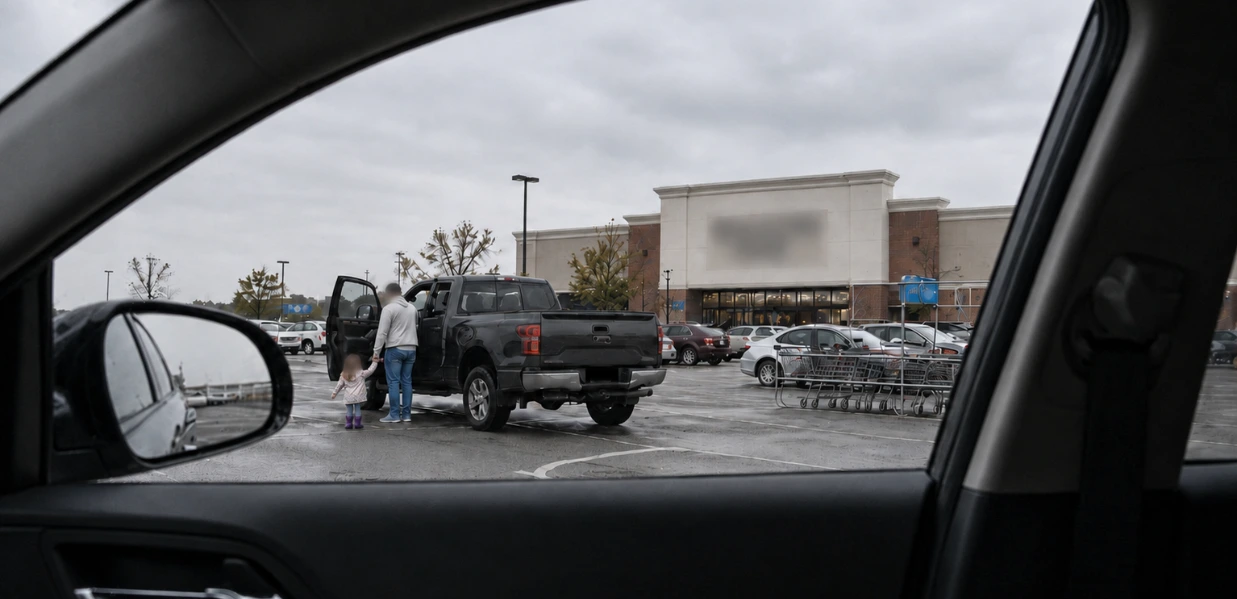
Todd dropped his daughter off every morning at the Montessori school he had personally enrolled her in, went to work, came back, and picked her up in the afternoon. He took her to Discovery Green, to the Houston Zoo, to the Children’s Museum of Houston, and to Chuck E. Cheese. He drove carefully and within the law every time our investigators observed him behind the wheel, whether his daughter was in the vehicle or not. His household was quiet, there were no bars, and there were no crowds of people cycling through at odd hours. There was a father doing exactly what he had told the court he was doing, documented across five days by investigators who had no reason to favor either outcome.
We delivered the report, and every piece of the truth was in it.
Client name and identifying details have been changed. This Client name and identifying details have been changed. This case study is published with permission. study is published with permission.
THE CHALLENGE
Child custody investigations commissioned by one party carry a specific obligation: to document the truth, not to confirm the theory.
The first thing we told this client when she sat down was the same thing we tell everyone who retains us in a custody matter. Our findings will be used in a legal context. They may affect where a child lives and how often each parent sees her. The documentation has to be complete, honest, and gathered without any predisposition toward the outcome the commissioning party wants to find. If the evidence supports the concerns, the report reflects that. If the evidence contradicts those concerns, the report reflects that too.
Three things shaped the operational approach before our investigators left the office.
The first was that the claims were specific. Reckless driving, bar attendance, and household traffic are all documentable behaviors, which meant that five days of surveillance either would or would not produce evidence consistent with each claim, and that the absence of such evidence would itself be a documented finding.
The second was that a child was in the middle of it. Whatever the outcome, a young girl was living in this household, attending this school, riding in this car. Our investigators carry that weight on every custody case we accept.
The third was that the report would ultimately be placed in front of a family court, which means partial findings or selectively reported observations are not just professionally unacceptable, they are legally dangerous. The file had to be complete.
Our investigators needed to document Todd’s complete daily routine, his behavior during school drop-off and pickup, his conduct at work, all activities with his daughter outside the home, his driving behavior with and without his daughter as a passenger, all individuals entering and exiting his residence, and the household environment across the full evening surveillance window. Then we needed to deliver whatever that documentation showed, without modification.
THE INVESTIGATION
Five days in Houston, and the case record looked nothing like the picture the mother had brought us.
Each day built on the last. By the end of the operational period our investigators had assembled a comprehensive documented account of a man whose daily life was organized almost entirely around his daughter’s schedule, her development, and her wellbeing. Here is how the picture came together.
The morning routine contradicted the first claim before the first day was done
Our investigator established a position near Todd’s Houston-area residence in the early morning hours of day one. Todd emerged with his daughter at the expected time, secured her properly in her car seat, and drove to a local Montessori school he had personally enrolled her in. His driving was calm, deliberate, and fully within the posted speed limits from his driveway to the parking lot. Our investigator documented the entire route.
At the school, Todd walked his daughter inside personally. He did not drop her at the curb. He did not delegate the handoff. He walked her in, spoke briefly with staff, and returned to his vehicle before driving to work. The drive to work produced the same documented result: appropriate speed, no aggressive maneuvers, no conduct consistent with the reckless driving described to us at intake.
The Montessori school had not been mentioned in the mother’s account of Todd’s daily life. Our investigators noted that deliberate enrollment in a Montessori program is not a detail that appears in the daily routine of a man spending his evenings at bars and his mornings recovering from them. It is a detail that appears in the daily routine of a man who has made an intentional investment in his daughter’s education.
The afternoon pattern was consistent, deliberate, and fully child-centered across every operational day
Todd’s workday ended in time to allow him to collect his daughter before the school day closed, and that pickup was not delegated to anyone else across the five-day operational period. He made it himself, every single day.
The afternoon destinations across the surveillance window shared one consistent characteristic: every single one of them was somewhere a child would want to go. Discovery Green. The Houston Zoo. The Children’s Museum of Houston. Chuck E. Cheese on the final afternoon of the observation period, where our investigator documented Todd inside the establishment with his daughter for an extended period during which he was attentive and engaged in the way a parent is when a child has their full attention rather than their partial attention.
Every drive to every destination was documented. Todd’s driving behavior with his daughter in the vehicle was calm, patient, and fully consistent with the conduct of a parent who understood what he was carrying in the back seat. There were no aggressive lane changes, no excessive speed, and no conduct of any kind that would have caused a trained investigator to flag concern.
The household across every evening of surveillance was not what the mother had described
The mother had characterized Todd’s household as a place where people were constantly coming and going, where women cycled through at irregular hours, and where the environment was unstable in ways that made it unsuitable for a young child in primary custodial care. Our investigators documented the residence across the evening hours of each surveillance day to assess whether that description was consistent with the observable record.
It was not.
The residence was quiet in the evenings. Todd brought his daughter home after their afternoon outings, and the household settled into what our investigators could only describe as an ordinary domestic evening: dinner, the sounds of a child in a home, and lights out at a time consistent with a young child’s bedtime. No stream of visitors was documented across any evening of the observation period. No individuals were observed arriving or departing at irregular hours. The household activity documented across the five-day window was entirely consistent with a single parent managing a child’s evening routine with care and consistency.
Our investigators noted the specific absence of everything the mother had described. In a custody investigation, absence of documented concern carries the same evidentiary weight as a documented incident. The household was not what the mother had represented it to be.
EVIDENCE WE PRODUCED
Everything below came out of five days of child custody surveillance and appears in the report delivered to the client with supporting documentation.
Consistent evening routine. Household lights-out timing was consistent across multiple surveillance evenings and fully consistent with the schedule of a young child in primary custodial care.
Daily school drop-off. Todd drove his daughter to her Montessori school every morning of the operational period, walked her inside personally, and spoke with staff before departing.
Driving behavior, both with and without his daughter. Every documented journey, regardless of whether his daughter was a passenger, showed calm, lawful driving fully consistent with posted speed limits and safe operation. No instances of reckless, aggressive, or unsafe driving were observed across the five-day window.
Daily school pickup. Todd collected his daughter personally at the end of each school day without exception or delegation.
Child-centered afternoon activities. Documented destinations across the observation period included Discovery Green, the Houston Zoo, the Children’s Museum of Houston, and Chuck E. Cheese. Todd was documented as attentive and engaged at each location.
Household observation across five evenings. The residence was quiet across all evening surveillance periods. No visitors consistent with the mother’s description of the household were documented on any night.
Complete absence of bar attendance. No visits to bars, clubs, or alcohol-serving establishments were observed during the operational period.
HOW THE EVIDENCE HELPED
What a family court, a family law attorney, and a parent can each do with a five-day documented record.
The deliverable at the end of a custody investigation is not a verdict but a file. A conclusion is something a court has to take on faith. A documented file is something attorneys, judges, and both parties can examine, test, and act on, and that difference is the entire reason professional custody surveillance is worth commissioning.
Todd’s attorney received a complete surveillance report documenting five days of parenting conduct, household observation, and driving behavior that collectively contradicted every specific claim the mother had made in the custody modification proceeding. A claim that a parent drives recklessly is difficult to prosecute in court when the opposing party can produce a five-day documented record showing no single instance of unsafe driving. A claim that a parent spends his evenings at bars is difficult to sustain when the opposing record shows quiet household evenings and consistent early bedtimes. A claim that the household is unstable and high-traffic is difficult to argue when the surveillance record shows no visitors on any observed evening. Individual claims can be disputed. A pattern across five documented days is considerably harder to characterize as exceptional or fabricated.
The mother received the same report. Whatever her attorney advised her to do with those findings was her decision to make. What she received from our investigators was an honest account of what five days of professional surveillance actually produced, without modification in either direction.
The child remained in Todd’s primary custody, and the record is what shows why.
THE RESULTS
The father was exactly who he said he was. The documented record confirms it across every operational day.
Five days of surveillance across the Houston area produced a documented record that contradicted every significant claim the mother had made when she initiated this investigation. The claims were specific, the investigation was thorough, and the findings were delivered without modification to both parties through their respective legal representation.
Todd was documented driving his daughter to and from her Montessori school each day of the operational period, with no instances of reckless, aggressive, or unsafe driving observed across any journey with or without his daughter as a passenger. He was documented collecting his daughter from school personally each afternoon and taking her to child-centered destinations including Discovery Green, the Houston Zoo, the Children’s Museum of Houston, and Chuck E. Cheese, with behavior at each destination consistent with attentive, engaged parenting. The residence was documented across five evening surveillance periods as a quiet, stable household with no stream of visitors, no individuals arriving or departing at irregular hours, and an evening routine consistent with the needs and schedule of a young child in primary custodial care. The investigative report reflected a parental lifestyle fully consistent with the responsibilities and demands of primary custody of a young child, and documented the complete absence of evidence supporting the claims that had formed the basis of the custody modification effort.
After seventeen years and more than eight hundred cases, we have produced surveillance records on both sides of custody disputes. The standard is always the same: document what is there, report it honestly, and let the record speak for itself. In this case the record spoke clearly. The child is still home with her father.
WHY CHOOSE US
Seventeen years of documented casework. Founded in 2009, with more than eight hundred cases closed across Houston, Dallas, Austin, San Antonio, Miami, and Atlanta.
Honest findings regardless of who commissions the investigation. We document what our investigators actually observe. In this case, that meant delivering a report that directly contradicted the commissioning party’s claims. That outcome is uncomfortable for the client and necessary for the court. We deliver it either way.
Reports built to be used in family court. Our findings are structured for family law attorneys and family court judges, organized by date, location, and specific observation, with timestamped documentation at every entry.
Custody investigation experience on both sides. We have worked for mothers, fathers, custodial parents, non-custodial parents, and parties on both sides of modification proceedings. The standard does not change based on who is paying for the investigation.
Honest expectations from the first conversation. We tell you what custody surveillance can and cannot confirm before you retain us, not after. If the investigation produces findings you did not want, you will still receive them completely and honestly.
Licensed and accountable. Texas DPS License A30913601, with investigators operating across six metro markets.
CONTACT US
Ready to know what the documented record actually shows?
Whether you are seeking documentation of a co-parent’s conduct that you believe puts your child at risk, or you are a parent facing custody claims you know do not reflect your actual home and your actual parenting, our investigators know how to build the documented record that replaces speculation with fact. A confidential consultation costs you nothing and will tell you whether a custody investigation makes sense for your situation.
Call (832) 404-3400 or submit your case below. Everything you tell us stays between us.
getanswers@piterrance.com
piterrance.com/new-case-request/
FREQUENTLY ASKED QUESTIONS
Can a custody investigation produce findings that favor the parent being investigated?
Yes, and this case is the clearest example of that in our files. Our investigators document what they observe without shaping findings toward what the commissioning party wants. Five days of surveillance produced no documented evidence supporting any of the specific claims the mother had brought to us at intake. The father’s lifestyle, parenting conduct, and household environment were documented as fully consistent with the responsibilities of primary custody.
How long does a child custody surveillance investigation take?
Most child custody cases we handle resolve within five to ten operational days. This case ran five days and produced a complete documented record covering the father’s morning routine, workplace, afternoon parenting activity, driving behavior, and household environment across all evening surveillance periods. The more operational days we have, the stronger the documented pattern.
Can custody surveillance findings be used in a Texas family court proceeding?
Yes. All documentation is gathered through legal surveillance methods and organized in a format suitable for family court proceedings and custody modification hearings. We recommend working with a family law attorney who can advise on how the specific findings in your case apply to your legal situation.
What if I am a parent facing false claims in a custody dispute?
The discomfort of being investigated is real, but if you are the parent you say you are, the documented record will say so too. A professional surveillance report produced by investigators with no stake in the outcome is one of the strongest tools you can bring into a custody hearing. It replaces a claim with a documented pattern, and a documented pattern is considerably harder to argue around than an allegation.
Do you investigate both sides of custody disputes?
Yes. We have documented parenting conduct on behalf of mothers and fathers, custodial and non-custodial parents, and parties on both sides of modification proceedings. Our standard is the same regardless of who retains us: complete, honest documentation of what our investigators actually observe.
How do I start a child custody investigation with Terrance PI?
Call or text our team at (832) 404-3400, email getanswers@piterrance.com, or submit your case at piterrance.com/new-case-request/. We respond quickly and handle every inquiry with complete discretion.
Resources and Guides
Texas Family Law Foundation
Resources and referrals for individuals navigating Texas family court, custody proceedings, and custody modifications.
https://www.txfamilylawfoundation.org/
American Association for Marriage and Family Therapy (AAMFT)
Find a licensed therapist specializing in co-parenting conflict, custody transitions, and the emotional complexity of high-conflict custody disputes.
https://www.aamft.org/Directories/Find_a_Therapist.aspx
Psychology Today – Find a Therapist
Search licensed counselors in Houston specializing in divorce, co-parenting, and the impact of custody disputes on children and parents.
https://www.psychologytoday.com/us/therapists
Texas Attorney General – Child Support Division
Resources for parents navigating custody orders, modifications, and enforcement in Texas family court.
https://www.texasattorneygeneral.gov/child-support
If you are involved in a custody dispute and wondering what a professional investigation can and cannot confirm, our child custody investigation insights can help you understand the process.