
CASE OVERVIEW
She was not calling because she was guessing. She was calling because the pattern had changed.
Most people think infidelity investigation cases begin with one obvious mistake. That is not usually how they begin. More often, they start with a change in behavior that is hard to isolate but impossible to ignore once you have lived beside someone long enough to know what normal looks like.
That was the position the client arrived in. Her husband was still making it home with explanations that sounded workable on the surface, and nothing he was doing was obvious or provable. There were no receipts left out, no message pulled up at the wrong time, no outright slip that turned suspicion into proof.
What she did have were the smaller tells that often matter more than people realize: the phone placed face-down more often than before, the vaguer answers about his day, the quicker deflection when she asked ordinary questions, and a distance she had learned to read long before she ever called our office. Small things. Not meaningless things.
There was also one detail she could not get past. Something at his workplace had shifted. A name that used to come up in routine conversation had stopped coming up altogether, and the silence around it stood out more than the name ever had. She arrived composed, clear-eyed, and specific. She did not come in to vent. She came in to have a question answered properly.
“I did not need you to tell me what I already knew,” she told us. “I needed it in a file I could use.”
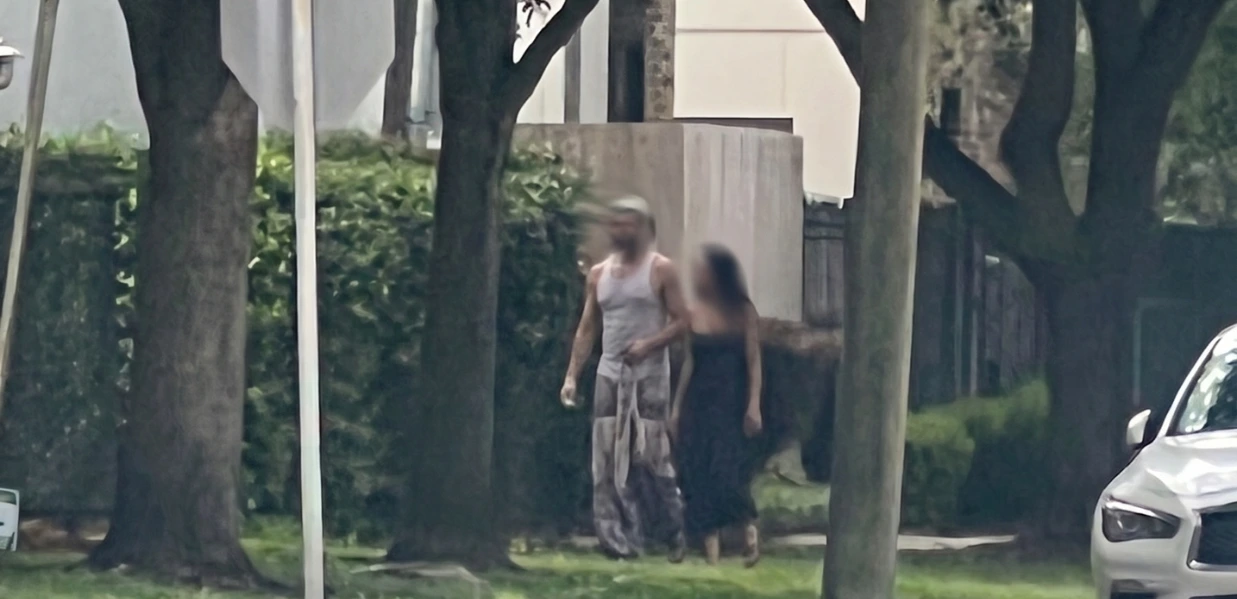
Our infidelity investigators followed him, documented the gap between the story and the movement, and turned her certainty into a timestamped legal record.
This closed case study has been anonymized. Names, workplaces, vehicles, and identifying details have been changed or omitted to protect privacy.
THE CHALLENGE
The cover story was already built. Our job was to document what happened between the end of the excuse and the beginning of the truth.
A workplace connection can make an infidelity investigation harder, not easier. Professional contact explains away almost anything at first glance. A dinner becomes a work dinner. A detour becomes a work errand. A delayed arrival becomes one more thing that came up before he could leave.
That last part matters. When the other individual is connected to work, a spouse who pushes back can end up sounding unreasonable even when her instincts are accurate. The explanation comes pre-assembled, and it often sounds just plausible enough to keep the subject in control of the conversation.
Most people think a suspicious evening is the case. That is not the case. A professional investigation is not built around one odd stop or one uncomfortable feeling. It is built around verified activity, documented in sequence, and checked against the explanation being given at home.
In practice, the answer is usually not one incident but a pattern. Our job was to document the subject’s movements across multiple occasions, establish whether the same individual appeared consistently rather than incidentally, and build a file with no room left for an alternative explanation.
That is the kind of file that matters when a client’s attorney walks into a room with it. A guess is not a finding. A timestamped pattern, properly documented, is different.
THE INVESTIGATION
He left work and did not come home. He went to her first.
This infidelity investigation was conducted in the greater Houston area, with mobile and fixed surveillance focused on the period between the end of the subject’s workday and his claimed return-home routine.
The gap between work and home, and who was filling it
The first task was to establish the real shape of the time gap. The subject’s stated work-related delays suggested one routine. His actual movements suggested another. Investigators documented the shifted arrival time, the absence of any clear accounting for the missing time, and the routes and destinations that filled that gap across multiple occasions.
That distinction matters. One unexplained delay can be noise. Repeated delays ending in the same places and involving the same person often are not. Over the course of the operational window, the other individual did not appear incidentally in the record. She appeared consistently.
What our investigators actually saw
Two colleagues having dinner is not a story by itself. People work together, meet after hours, and travel between locations for legitimate reasons. A professional investigation does not inflate ordinary conduct into a conclusion.
What our investigators documented was not ordinary professional contact. The observations, taken in context and across more than one occasion, were consistent with a personal relationship and inconsistent with two people who simply happened to work together. The significance was not one photograph or one stop. It was the verified nature of the contact, the repeated presence of the same individual, and the context surrounding those meetings.
The pattern, the file, and what the client said when she read it
One occasion is an incident. Multiple occasions consistent in nature and in the individuals involved is a relationship. Our investigators documented the pattern rather than chasing a dramatic moment.
The resulting file organized the movements, times, locations, photographs, and observations into one record. It was structured to show what happened, when it happened, and why the explanation being offered at home no longer fit the documented facts.
When the client sat with the file, she did not react with surprise. She sat with it quietly and said she had known. She had just needed to stop being the only one who knew it.
What the investigation produced
A short operational summary of the delivered findings:
- The subject’s actual movements documented. His routes, post-work destinations, and delays between leaving work and returning home were recorded across the operational window.
- The unidentified woman located and confirmed. The other individual was documented consistently enough to establish that she was part of the pattern, not a one-time coincidence.
- The nature of the contact documented. The observed interactions were consistent with a personal relationship and not adequately explained by an ordinary professional connection.
- The pattern established across the operational window. Multiple occasions were documented in a way that removed the idea of an isolated incident.
- The complete timestamped report delivered. The client received a professionally organized surveillance file for personal review and potential legal use.
HOW THE EVIDENCE HELPED
She already knew what was wrong. What she lacked was a file — the difference between a feeling he could dismiss and a fact he could not.
Before the investigation, her husband had been managing the situation with plausible explanations, timed attentiveness, and just enough low-level reassurance to make a perceptive person question her own read of the situation. That is common in these cases. The issue is not always a dramatic lie. Often, it is the steady management of doubt.
The file ended that. It established what she knew in a form that existed independently of his willingness to acknowledge it. A spouse’s certainty is not evidence. A timestamped surveillance report is. Once the activity was documented, the question was no longer whether he would admit it. The record stood on its own.
Because Texas is a community property state, documented infidelity can be relevant to how a divorce unfolds, including how facts are presented and evaluated in a proceeding. Our report was organized with that in mind, with findings structured for review by counsel if the client chose to use it that way. Whatever she decided next was entirely her call.
THE RESULTS
The documented record answered the question and left the alternative explanations with nowhere to go.
The investigation established a consistent pattern between the end of the subject’s workday and his delayed return home. His movements did not match the version of events being presented to the client. The other individual appeared repeatedly in the documented record, and the nature of the contact was not consistent with an ordinary workplace relationship.
That is what a good file does. It does not create drama. It removes ambiguity. By the time the report was delivered, the issue was no longer whether the client was overreading small signs. The documented pattern had emptied out the other explanations.
Clarity begins with facts, not assumptions.
Why Choose Us
- Seventeen years of documented casework. Terrance Private Investigator & Associates was founded in 2009 and has closed 800+ cases across Houston, Dallas, Austin, San Antonio, Miami, and Atlanta.
- We follow the evidence, not the assumption. Suspicion may start a case, but verified findings are what complete it. We document what can be observed, corroborated, and reported.
- Greater Houston and surrounding county surveillance experience. Our investigators regularly work cases throughout the Houston area, including Katy, Cypress, Spring, Pearland, Friendswood, and League City.
- Reports built for divorce proceedings. Every finding is timestamped and structured in a way attorneys and courts can review clearly and efficiently.
- Complete discretion at every stage. The investigation was conducted without alerting the subject, and the subject never knew an investigation was taking place.
- Licensed and accountable. Terrance Private Investigator & Associates operates under Texas DPS License A30913601.
You have been carrying this long enough. We can tell you what is actually there.
If you need facts, not more guessing, we offer confidential consultations at no cost. You can call (832) 404-3400, email getanswers@piterrance.com, or submit a case request at piterrance.com/new-case-request/.
Resources
Internal Resources
- Infidelity Investigations
Professional surveillance and documentation for suspected spousal infidelity and related relationship concerns. - Surveillance Investigations
Learn how professional surveillance is planned, conducted, and documented within lawful investigative boundaries. - Background Checks
Verified background research to help clarify identity, history, and relevant public-record information. - Who We Serve: Individuals
An overview of investigative services for people dealing with personal, family, and relationship matters. - Who We Serve: Lawyers
How attorneys use our investigative support, surveillance findings, and court-ready documentation. - Start Your Case
Request a confidential consultation and share the basic facts of your situation with our team.
External Resources
- Affair Recovery
Support resources and educational material for individuals and couples dealing with infidelity. - Psychology Today: Find a Therapist
Search for licensed therapists by location and specialty, including relationship and betrayal issues. - AAMFT: Find a Therapist
Locate licensed marriage and family therapists through the American Association for Marriage and Family Therapy. - State Bar of Texas: Find a Lawyer
Search for Texas attorneys, including family law counsel, by practice area and location. - Texas Law Help: Divorce
Practical legal information about divorce in Texas, including forms, process guidance, and court information.
Frequently Asked Questions
What is a cheating spouse investigation in Houston?
A cheating spouse investigation in Houston is a professional surveillance and documentation process used to verify whether a spouse’s actual movements and contacts match the explanation being given at home. It is not guesswork and it is not casual online searching. Investigators establish routine, document deviations, and produce a report based on observed facts, timestamps, photographs, and written notes gathered from lawful vantage points.
What if the other person is someone he works with?
That can make a case more complex because professional contact gives the subject a ready-made explanation for meetings, calls, dinners, and schedule changes. None of that automatically means infidelity, and that is exactly why verification matters. Investigators look for pattern, context, repeated contact, and conduct that is consistent with a personal relationship rather than simply assuming that a workplace connection proves anything.
How long does a spousal infidelity investigation take?
The timeline depends on the subject’s routine, the available facts, and how often the relevant activity occurs. Some cases produce useful findings quickly. Others require multiple surveillance dates to establish whether a pattern exists. The goal is not speed for its own sake. The goal is a documented record strong enough to replace uncertainty with verified information.
Can findings from an infidelity investigation be used in a divorce proceeding?
They often can, depending on the nature of the findings and how the matter is being handled by counsel and the court. In Texas, documented infidelity can be relevant in a divorce case, particularly when evidence is clearly organized and lawfully obtained. A spouse’s suspicion is not the same as evidence. A properly prepared surveillance file may be useful to an attorney evaluating next steps.
What should I do if I have been sitting with this feeling for a long time and I am still unsure?
You do not need to wait for a dramatic mistake before you ask questions. If the concern has been persistent and tied to specific behavioral changes, it may be time to speak with a professional investigator about whether the situation is investigable. That conversation should clarify what can be documented, what cannot, and whether there is enough pattern or timing to justify surveillance. None of this means you are overreacting. It means you are trying to verify before making a decision.
How do I start an infidelity investigation with Terrance PI?
The first step is a confidential consultation. You can contact Terrance Private Investigator & Associates by phone at (832) 404-3400, by email at getanswers@piterrance.com, or through the case request form at piterrance.com/new-case-request/. From there, we review the facts you already have, explain what a professional investigation can and cannot establish, and outline a practical approach based on the routine and timing involved.
Takeaway
Most people think a cheating spouse investigation is about catching one dramatic mistake. That is not the real work. The real work is establishing routine, documenting deviations, confirming whether the same individual appears consistently, and building a timestamped record that can stand on its own. In this case, the client’s suspicions were not treated as proof, but they were treated seriously enough to verify. The investigation replaced an explanation she could not confirm with a documented file she could use, helping her make decisions from verified facts rather than assumptions.
More Case Studies
Read more anonymized examples from Terrance Private Investigator & Associates closed cases. Careful surveillance, disciplined reporting, and verified findings are more reliable than assumptions.