
Proving a Custody Violation in Austin
One late handover is an anecdote. A dated pattern is a ...
You are describing something to your attorney that you cannot prove, and the other parent is describing something different. An Austin child custody investigation documents what is actually happening during their time, so the conversation stops being one person’s word against another’s.
1
If you are reading this, your child has probably come home and said something that stayed with you. Or the exchanges have started running late. Or somebody new is around and you know almost nothing about them. You are not being difficult, and you are not the first parent in this city to feel that nobody is listening.
An Austin child custody investigation is careful, undramatic work. We document what can be observed from public places during the other parent’s periods of possession, and we record it with dates, times and time-stamped media. No speculation about anyone’s parenting, no investigator offering a view on who should have the children. Evidence over assumptions, every time.
Across 17+ years and more than 800 closed cases, the pattern we see most often is a parent who has been told their concerns are not actionable without documentation, and who has no idea how to obtain it lawfully. That is the gap this fills. Some of these cases confirm what a parent suspected. Others show the arrangement is working better than they feared, and that is a real outcome too.
We will be honest about limits before you spend anything. We cannot promise a finding, we do not offer opinions on custody, and if what you describe suggests a child is in immediate danger the right call is 911, not us.
We work the whole Austin metro, from Downtown and East Austin out through South Congress, Hyde Park, Mueller, Westlake and Lakeway, and across Travis, Williamson, Hays, Bastrop and Caldwell counties into Round Rock, Cedar Park, Georgetown, Pflugerville, Kyle and Buda. See our Austin private investigator page for coverage.
Most parents searching for a custody investigator in Austin expect us to prove the other parent is unfit. That is not what this is, and a firm that agrees to it is telling you what you want to hear.
What we document is observable fact during the other parent’s time. Who collects the children and when. Whether exchanges happen at the agreed time and place. Where the children are taken. Who else is present regularly. Whether a vehicle carrying them is being driven in a way that would concern anyone. Whether the children are left with someone else for extended periods when the order says otherwise.
Texas courts decide these matters on the best interest of the child, and how a specific fact bears on that is a question for your attorney and the court. We do not characterise anybody as a good or bad parent, and we do not tell you what a Travis County judge will make of what we saw. An investigator who blurs that line hands the other side something to attack.
Central Texas adds a practical wrinkle worth knowing. Orders are frequently entered in one county while one parent has moved to another, because Austin’s growth pushed families out to Round Rock, Georgetown, Kyle and Buda. Exchanges often happen at a midpoint that belongs to neither county. That affects where surveillance can lawfully be conducted and how a schedule is planned, and it has to be thought through before anyone goes anywhere.
No two custody matters run the same way, so we build each investigation around the order, the schedule and what is realistically observable. Our work may include:
2
Nobody arrives here casually. It usually follows months of small things that did not individually justify a phone call, and one that finally did.
At Terrance Private Investigator & Associates we document what can actually be observed so your attorney has facts rather than an account. We do not tell you what we believe about the other parent, and we are equally direct when what we observe does not support what you expected.
3
What 17+ years of Austin custody investigations has taught us, written for the parent trying to work out whether documentation is the right step.
One late handover is an anecdote. A dated pattern is a ...

It has to survive scrutiny, not just exist. Most of what parents ...
Priced in possession periods, and in Central Texas the drive between counties ...

Four questions separate a firm worth engaging from one that will damage ...
4
5
Licensed by the Texas Department of Public Safety under A30913601, working Austin and Central Texas family matters since 2009.
on Google across more than 600 verified client reviews. Ask any Austin firm you are considering how many they have.
Not to speak to, not to question, not for footage that serves no evidential purpose. Courts notice, and so do we.
We document what happened. We do not tell a court who should have the children, and we do not characterise anyone as a good or bad parent.
No trespass, no recording conversations we are not party to, no unauthorised tracking, no contact with the other parent. Every method is one we can explain in a courtroom.
Possession periods are evenings and weekends, and exchanges often sit between Travis, Williamson and Hays. We plan and staff around that rather than around office hours.
6
Observation from public places is lawful. Almost everything parents are tempted to do beyond that is not, and getting it wrong damages your position far more than it helps.
A licensed investigator may observe and document from public vantage points, including who collects a child, where they are taken and who is present. Terrance Private Investigator & Associates is licensed by the Texas Department of Public Safety under License #A30913601, and every Austin custody investigation we run stays inside that boundary.
What falls outside it:
If you believe a child is being harmed or is in immediate danger, call 911. Suspected abuse or neglect should be reported to the Texas Abuse Hotline on 1-800-252-5400, run by the Texas Department of Family and Protective Services. Those routes cost nothing and carry powers no private firm has. Surveillance is not a substitute for either, and we will say so.
This is general information rather than legal advice. Your attorney is the person to advise you on your own matter.
Most firms will not put anything about cost on the page. For a parent already paying an attorney, that silence is unhelpful.
We bill custody work hourly or by the case, and which fits depends on how defined the question is.
Hourly suits ongoing observation, because surveillance is investigator hours in the field and the cost tracks how many periods of possession need covering. Custody matters often need several sessions rather than one, since a single afternoon shows an afternoon and a pattern is what actually carries weight.
By the case suits a defined question: documenting a specific exchange, verifying who resides at an address, establishing whether a named person is regularly present, or researching a new partner’s public record. You get one number before we start, which is easier to place alongside legal costs.
Two Central Texas factors matter. Possession periods are usually evenings and weekends, which is when investigator availability is tightest across the metro, so scheduling early gets better coverage for the same money. And exchanges frequently happen at a midpoint between Travis and Williamson or Hays, which adds travel to every session, particularly when I-35 is moving badly.
On the first call we will talk through the order and the schedule, tell you which structure fits, and give you a clear picture of cost. If we think the schedule you are describing gives us little realistic chance of documenting anything meaningful, we will say so before you commit rather than after.
8
This is one of the most common instructions we receive, and it is also the one most often misunderstood.
Wanting to know who is spending unsupervised time with your children is reasonable, and courts treat the question as a legitimate one. What it does not entitle anyone to is surveillance of a private adult who has done nothing except begin a relationship with your former partner.
What we can do is research the public record. Criminal and civil court filings, judgments and liens, property and residency history, business interests, and identity verification. That answers the question most parents actually have, which is whether there is anything on record that a court would want to know about.
What we will not do is follow that person through their own life, monitor them at work, or build a general dossier on a private individual. If a records check comes back clean, that is the answer, and continuing to look is not investigation.
One practical note. We do not screen anyone for employment or caregiving purposes, because that is consumer reporting and it is regulated. This is research into whether there is a documented history relevant to a family law matter, and the distinction is not academic.
9
Most of this work reaches us through counsel, and those matters run to a different rhythm from a parent calling directly.
When an attorney engages us the scope is narrower and the deadline is real. Counsel needs specific periods covered before a hearing, a modification or a mediation. We work to that scope, report on the schedule you set, and do not expand without authorisation. Reports are chronological with time-stamped media so they can be reviewed quickly rather than reconstructed, and we can provide a declaration of observation where you need one.
We are careful about what we will not claim. We do not tell your client that documentation guarantees an outcome, we do not characterise material as admissible, and we do not offer views on how a Travis County court will weigh anything or on what is in a child’s best interest. Those are determinations for the court, and an investigator who strays into them creates a problem you have to clean up.
We also raise it with you rather than proceed quietly if an instruction starts to look like it is about the other parent rather than the children. See our attorneys and legal professionals page for the wider scope.
10
Parents rarely ask this before engaging, and it determines whether the work is worth anything in a courtroom.
Every case closes with a written investigative report. It opens with what was requested and the scope worked to, then a chronological log of observed activity with dates, times, locations and durations. Where something was documented visually, the corresponding time-stamped video or photographs are referenced against the log entry. Vehicles are identified by make, model and plate where visible. Adults present are described as observed, and identified where lawful research supports it.
Children are described only as necessary to record what was observed, and never photographed in a way that serves no evidential purpose. We take that seriously, and so does a court.
The report also states plainly what was not observed. A period covered with nothing of note appears in the record, because a gap you do not know about is worse than a gap you do, and because a report containing only adverse observations invites the obvious question about what else was watched.
Everything is delivered in a format your attorney can work with directly, in declaration form where needed.
11
By the time most parents call, they have already tried something. That is normal, and a few of those attempts do real damage.
Do not question your child for evidence. This is the most common and the most costly. Courts take a dim view of it, the other side will raise it, and children repeat what they think the asking parent wants to hear. Let them tell you what they tell you.
Do not record a conversation you are not part of. Placing a device in a bag or a car to capture the other household is not lawful and can carry criminal exposure. It also destroys the credibility of everything else you present.
Do not follow the other parent yourself. You will be recognised, and a documented allegation that you were following them will outlast anything you managed to observe.
Do not confront them with what you suspect. Behaviour changes, and the pattern you were trying to document moves out of view.
Do keep a dated record of what you already notice. Late exchanges, missed periods, what your child mentioned and when, messages you received. That log is frequently what makes a surveillance schedule effective, and it costs nothing to keep.
12
Discretion in a custody matter runs in two directions, and the second is about the children rather than the case.
Ours is straightforward. Our investigators work in unmarked vehicles, vary position and approach, and disengage rather than press when a situation risks being noticed. We never approach or speak to the children, we do not identify ourselves to the other parent, and we do nothing that would place a child in an uncomfortable situation to obtain footage.
The second direction is the effect on your children, and it is worth thinking about before you start. Children should not know an investigation is happening. They should not be asked afterwards to confirm what was seen, and they should never be shown a report. Where an instruction would require a child to be aware of the process, we will raise it with you rather than carry it out.
On your side, the ordinary risks apply. Shared family calendars and cloud accounts sync. Messages to relatives get repeated. Bank statements show what you paid and to whom. We agree how findings reach you and what we put in writing, and we will tell you honestly if what is being asked for looks more like a way to pressure the other parent than a way to protect a child.
If you are weighing what is happening during the other parent’s time in Austin, a confidential consultation costs you nothing and may save you from a decision that is difficult to undo. Contact us at 512-900-5407, email getanswers@piterrance.com, or read more on our Austin child custody investigations page. When you are ready, you can start a case online. If you believe a child is in immediate danger, call 911 first.
13
You do not have to keep hoping somebody takes your word for it. A confidential consultation costs nothing, and we will give you an honest read on what an Austin custody investigation could realistically document given the order and the schedule, including when the honest answer is that surveillance is unlikely to produce what you need.
Real cases, real outcomes. To protect client privacy, names and identifying details have been changed or omitted.

A private individual needed to confirm a child's presence and document her ...

A father had a court order that said no contact. Our child ...
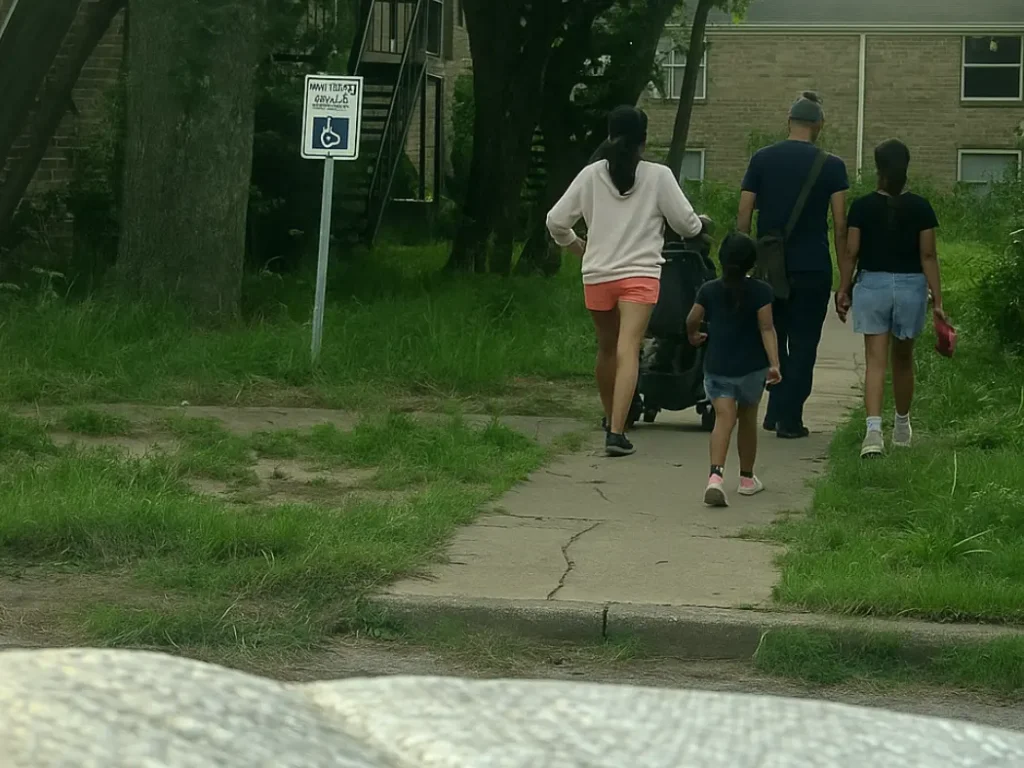
Case Overview A concerned father in South Side Houston contacted Terrance Private ...
Trust is most of this decision and we know it. See what Austin and Central Texas clients have shared about working with Terrance Private Investigator & Associates. Rated 5.0 on Google with 600+ verified reviews.
Custody matters do not stay inside one county. An order entered in Travis County, a parent who has moved to Round Rock in Williamson, and an exchange at a midpoint in Kyle is an ordinary week in this metro. We cover Travis, Williamson, Hays, Bastrop and Caldwell, and we plan around where possession periods actually happen rather than where the case was filed.
Most parents who contact us about an Austin custody investigation have never worked with an investigator before, and almost all ask the same things. Here are the honest answers, including what we will not do.
Observation from public places by a licensed investigator is lawful. What is not lawful is trespass, recording a conversation you are not party to, placing a tracker on a vehicle you have no authority to track, or accessing accounts and devices. We work inside the first and decline the rest.
We bill hourly for ongoing observation, because cost tracks how many possession periods need covering, and by the case for a defined question such as documenting one exchange or verifying who resides at an address. We give you a clear picture on the first call.
No, and any firm promising that is not being straight with you. We document observable fact during their time. Whether any of it bears on the best interest of the child is a determination for the court and your attorney, and we do not offer opinions on it.
Never. We do not approach, speak to or question children, and we decline instructions to. Children should not know an investigation is happening, should not be asked to confirm what was observed, and should never be shown a report.
Call 911 if there is immediate danger, and report suspected abuse or neglect to the Texas Abuse Hotline on 1-800-252-5400. Both are free and carry powers no private firm has. Surveillance is not a substitute for either, and we will tell you that rather than take the case.
We can research the public record: criminal and civil filings, judgments, property and residency history, business interests and identity. What we will not do is follow a private adult through their own life. If a records check comes back clean, that is the answer.
Yes. We work Travis, Williamson, Hays, Bastrop and Caldwell as a single operating area, which matters because an order entered in Travis County often involves a parent who has since moved to Williamson or Hays, with exchanges at a midpoint between them.
That happens and it is a real result. Sometimes it shows the arrangement is working better than a parent feared, which is worth knowing. We report exactly what was observed and exactly what was not, and we will not inflate a quiet weekend to justify an invoice.
Whether it is an order that keeps being ignored or something your child said that you cannot forget, the first conversation is confidential and costs you nothing.