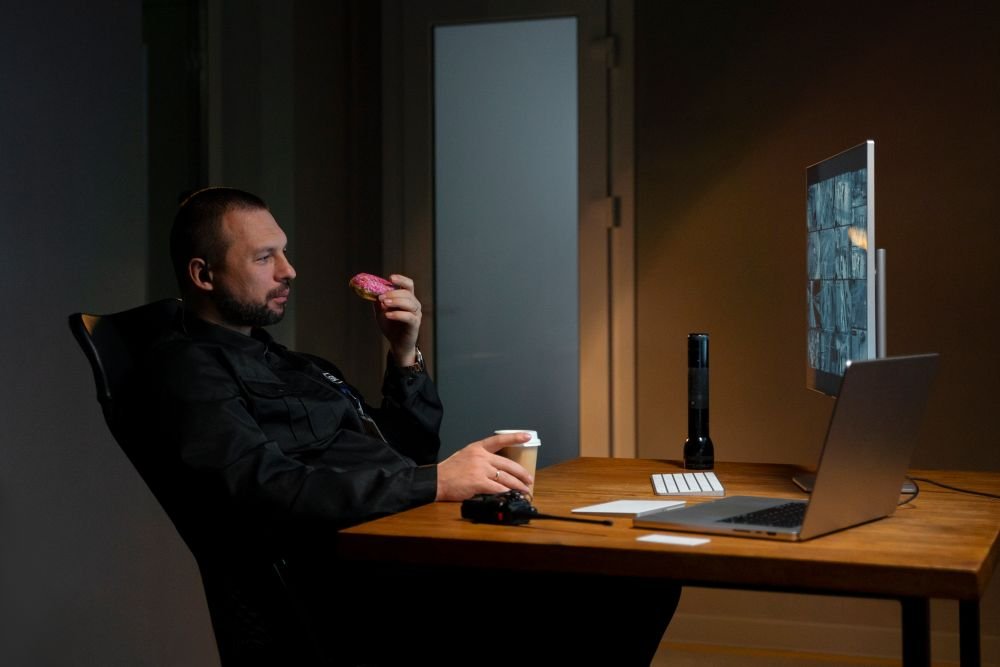

Infidelity surveillance in Dallas looks almost nothing like the version people picture. There is very little sitting outside a house and a great deal of driving, because this metroplex spreads a single evening across several cities. A session is planned around a known routine, run from public vantage points in unmarked vehicles, and documented with a chronological log and time-stamped media. The subject does not know it happened, and if they ever do, the session has failed regardless of what was recorded.
Here is how the work actually runs, and why the plan matters more than the equipment.
What a session actually involves
It starts before the subject moves. An investigator is in position early, because arriving as somebody is leaving is how a follow is lost in the first two minutes. Position is chosen for the exit route rather than the front door.
Then the follow, which in DFW usually means highway. Distance is held, position is varied, and the investigator disengages rather than presses when traffic makes a follow conspicuous. Losing a subject and picking them up at a likely destination is a better outcome than being noticed, and a firm that never loses anyone is either lucky or lying.
At the destination, documentation. Arrival time, the vehicle, who exits, who they meet, how long they remain, and departure. Time-stamped throughout, because a photograph without a verifiable time is an anecdote.
Why infidelity surveillance in Dallas is a driving discipline
Because the pieces of a life sit far apart here. A subject can live in Plano, work in Las Colinas, meet somebody in Uptown and end the evening in Deep Ellum, and that is an ordinary Thursday rather than an unusual one.
Each of those legs is a follow through congested corridors where a single set of lights separates the investigator from the subject permanently. In our experience working hundreds of cases nationwide, the difference between a productive session and a wasted one in DFW is far more often the traffic planning than anything to do with cameras.
It is also why some cases genuinely need two investigators. One vehicle can hold a short urban follow. A long run across county lines at peak hour frequently cannot, and a firm that never suggests a second investigator on those routes is not planning, it is hoping.
If you have reached the point where you need certainty rather than suspicion, a confidential consultation costs nothing and carries no obligation.
What we will not do
We observe from public places where there is no reasonable expectation of privacy. We do not trespass, we do not enter private property, we do not look through windows, and we do not record where privacy is reasonably expected.
We do not place tracking devices on vehicles our client has no legal authority to track, we do not access phones or accounts, and we do not use pretexting to obtain protected records. Every one of those would create exposure for you rather than for us, and would contaminate the material that was gathered lawfully. Terrance Private Investigator & Associates is licensed by the Texas Department of Public Safety under A30913601, and the relevant restrictions are set out in the Texas statutes.
We also screen intake and decline matters where the purpose looks like control or harassment rather than fact-finding. We do not promise to document anything, and no honest firm will. What we promise is that the schedule is planned around your situation and that you are told plainly when the odds look poor.
The part clients are least prepared for
That a session can produce nothing and still have been run correctly. A subject who stayed home, or who went exactly where they said, is a documented result rather than a failure, and it appears in the report with the hours it took.
The second is that discretion cuts both ways. Most exposure in these cases does not come from the investigator, it comes from the client. Shared cloud accounts sync messages. Family calendars are visible. Location sharing left on years ago still reports. Card statements show who was paid. We walk every client through this on the first call and adjust how we communicate accordingly, and it is frequently the most useful ten minutes of the engagement.
What to do next
Write down the routine, including the days and times when whatever concerns you actually happens, and the vehicle. Then have one conversation about whether the schedule offers a realistic window, because that is the question that decides whether surveillance is worth commissioning at all.
Our guide to what it costs covers budget, what to ask before hiring covers vetting, and if a filing is likely, what adultery means in a Texas divorce explains what documentation needs to achieve. See our infidelity investigations page.
Planning infidelity surveillance in Dallas around a real routine
The plan is built backwards from the window. Which evening, which hours, which exit route, and which likely destinations. In DFW that last part matters, because guessing wrong about whether somebody heads north on the Tollway or west toward Irving costs the whole session.
Done properly, infidelity surveillance in Dallas is unglamorous and quiet. No confrontation, no chase, no moment anybody would recognise from television, just an investigator in the right place before the subject moves.
Where a client can describe the routine precisely, the work becomes an efficient exercise: position early, hold one follow, document at the destination. Where the routine is genuinely unknown, the first session is usually reconnaissance rather than documentation, and it is fairer to say so up front than to present it afterwards as a disappointing result.
Collin and Denton county destinations add another consideration, since a subject heading to Frisco or McKinney is a forty-minute commitment before anything is observed. That is planned for rather than absorbed silently.
Frequently Asked Questions
How long does a surveillance session last?
Typically several hours, planned around the window when the behaviour is likely rather than run open-ended. Sessions are usually scheduled across more than one evening, because a pattern carries weight and a single night documents a single night.
Will the subject notice?
Not if the session is run properly. Investigators work in unmarked vehicles, vary position, and disengage rather than press when a follow becomes conspicuous. Losing a subject is preferable to being seen, because a subject who suspects surveillance changes everything.
Why would two investigators be needed?
Long follows across DFW at peak hours frequently cannot be held by one vehicle. Where a route crosses several cities on congested highways, a second investigator is the difference between documentation and an expensive lost evening.
Can you follow someone into a private club or building?
No. Observation is from public places where there is no reasonable expectation of privacy. We document arrival, duration and departure from outside, which is usually what matters, and we do not trespass or record where privacy is reasonably expected.
What if the session produces nothing?
It appears in the report as a covered period with no activity of note, along with the hours it took. That is a real result. Firms that treat quiet nights as failures tend to be firms that suggest one more session indefinitely.
If you are weighing what to do next, talk it through with somebody who runs these cases across DFW. A confidential consultation is free and carries no obligation, including an honest view on whether surveillance is likely to produce anything. Call 214-838-8004 or read more on our Dallas infidelity investigations page.