

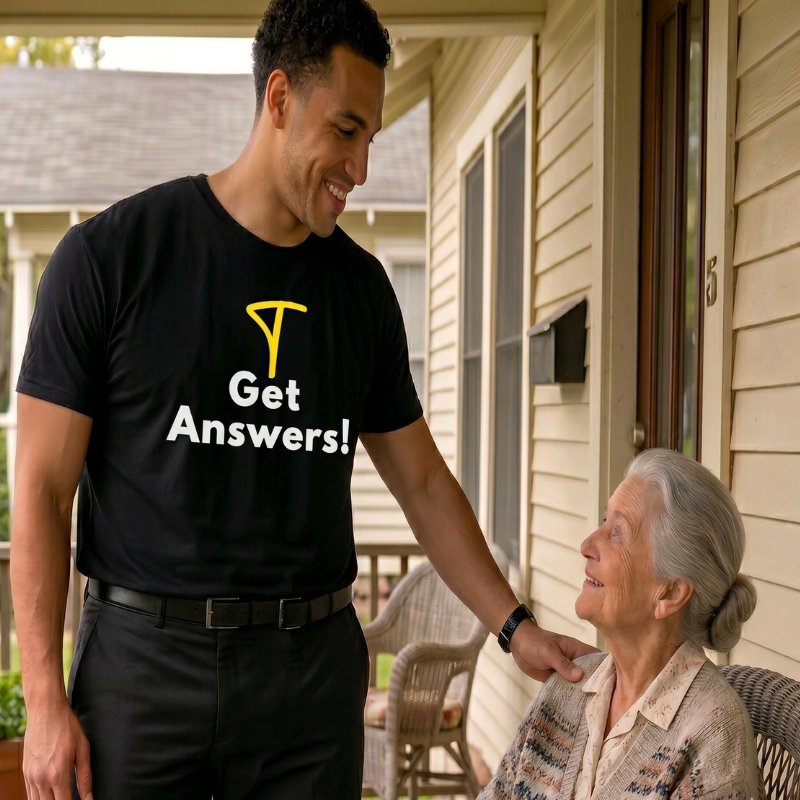
If you need to check on an elderly parent in Houston from another state, the hardest part is not the distance. It is that everything is fine is the answer to every question, and you have no way to test it. A documented check is somebody attending the address, having a short conversation, noting what has changed and reporting the same day. Done once it settles a worry. Done monthly it produces something far more useful, which is a record showing a trend rather than a snapshot. If you believe there is immediate danger, call 911 first, and if you suspect neglect or exploitation, Adult Protective Services investigates for free.
Here is what actually works, from families who have been doing this for years.
Why twice-yearly visits keep bringing shocks
Because decline is gradual and it does not announce itself between Christmases. Somebody who has lost a stone, stopped cooking properly and started sleeping in a chair will describe all of it as fine, and will mean it, because each change happened slowly enough to become normal.
Phone calls are worse than useless for this. A ten-minute conversation is exactly the length of time most people can perform normality, and adult children are the audience an ageing parent most wants to reassure. In our experience working hundreds of cases nationwide, the families who discover a problem early are almost never the ones who called more often. They are the ones who arranged for somebody to actually look.
What a documented check on an elderly parent in Houston looks like
An investigator attends the address at an agreed time, knocks, and speaks with your parent where they are willing. They note what was observed. Whether the door was answered readily, how the person presented, whether the house was warm, whether post had accumulated, whether the car had moved, whether there was food in evidence, whether anything had changed since the last visit.
Then a same-day report. Verbal first, because a family waiting on an email is a family still worrying, and written afterwards so you have something you can forward. Photographs only where you asked and where taking them was appropriate.
Over four or five monthly visits that record becomes genuinely valuable. It is the difference between I think Mum is struggling and here is a dated series of observations showing what changed and when. Our investigators are not clinicians. We describe what was observed and stop there, because a report that offers a view on somebody’s health or capacity is a report that fails the moment a doctor or a court reads it.
If you have reached the point where another unanswered call is not going to settle it, a confidential consultation costs nothing and carries no obligation.
The conversation nobody wants to have
Most families ask us to keep the visits discreet at first. We can, and we will be honest about the cost of it.
In our experience checks go better when the parent knows. Told plainly that their daughter in Denver worries and asked somebody local to look in, most people are irritated for about a week and relieved thereafter, particularly once they realise the alternative was being telephoned three times a day. A visitor who is expected also sees more, because nobody is performing for a stranger at the door.
Where the concern is that somebody else is influencing your parent, discretion may genuinely be warranted, and that is a different and larger piece of work. Establishing who has been visiting, what has changed financially and who now holds authority is an investigation rather than a visit, and we will scope it as one.
Free help you should use first
Adult Protective Services investigates suspected abuse, neglect and financial exploitation of older adults at no cost, on 1-800-252-5400. The Eldercare Locator, run by the US Administration for Community Living, connects families to local area agencies on ageing, meal programmes, transport and in-home support, also at no cost. Area agencies covering the Houston region can arrange assessments that are considerably more useful than anything a private investigator provides.
We say this on the first call, and we would rather point you to the free route than take money for a visit that duplicates it. What we add is the documented, scheduled, non-official set of eyes that none of those services provide.
What to do next
Write down what you have actually noticed, with dates. Missed calls, things said, changes in routine, anything a neighbour mentioned. Then decide whether you need one visit or a pattern, because the answer changes the cost and the value.
Our guide to how to request a police welfare check covers the free route, what a private check costs covers budget, and what happens during a check sets expectations. If nobody knows where your parent is at all, that is a different service and our Houston missing persons investigations page is the right place. See also our wellness check investigations page.
What to watch for between visits
Ask about specifics rather than generalities. Not are you eating properly, which invites a yes, but what did you have for lunch. Not are you getting out, but where did you go this week. The answers to specific questions are much harder to perform, and the gaps show quickly.
Pay attention to the things that change quietly. Post that goes unopened, a car that stops moving, a phone that is never charged, appointments that get missed, a friend who has stopped being mentioned. Any one of those means nothing. Three at once is usually worth a visit from somebody who can look properly.
Frequently Asked Questions
How often should someone check on an elderly parent?
It depends on what you are watching for. A single visit answers a worry. Where the concern is gradual decline, monthly or fortnightly checks over several months are what produce a usable picture, because a trend tells you far more than any single afternoon can.
Should I tell my parent about the visits?
Usually yes. Most people are irritated briefly and relieved afterwards, and an expected visitor sees more than a stranger at the door does. Where you suspect somebody else is exerting influence, discretion may be warranted and we will discuss that specifically.
Can you tell me if my parent still has capacity?
No, and be wary of anyone who says otherwise. Our investigators are not clinicians. We describe what was observed factually, and that description is frequently exactly what a doctor needs in order to make an assessment that is theirs to make.
What if my parent refuses to let anyone in?
We record the refusal and what could be observed from the door, and we leave. A competent adult is entitled to be left alone. We report exactly what happened, and we do not return repeatedly to try again.
Can you check on someone in a care home?
Often, though the facility controls access and may require your authority as a family member or guardian. We will tell you at the outset what is realistic, and we can usually verify that somebody is admitted and present without entering a restricted area.
If someone you care about has stopped answering, talk it through with somebody who does this work. A confidential consultation is free, and we will tell you honestly when the right answer is a free police check or a call to Adult Protective Services rather than an invoice from us. Call 832-404-3400 or read more on our Houston wellness check investigations page.