

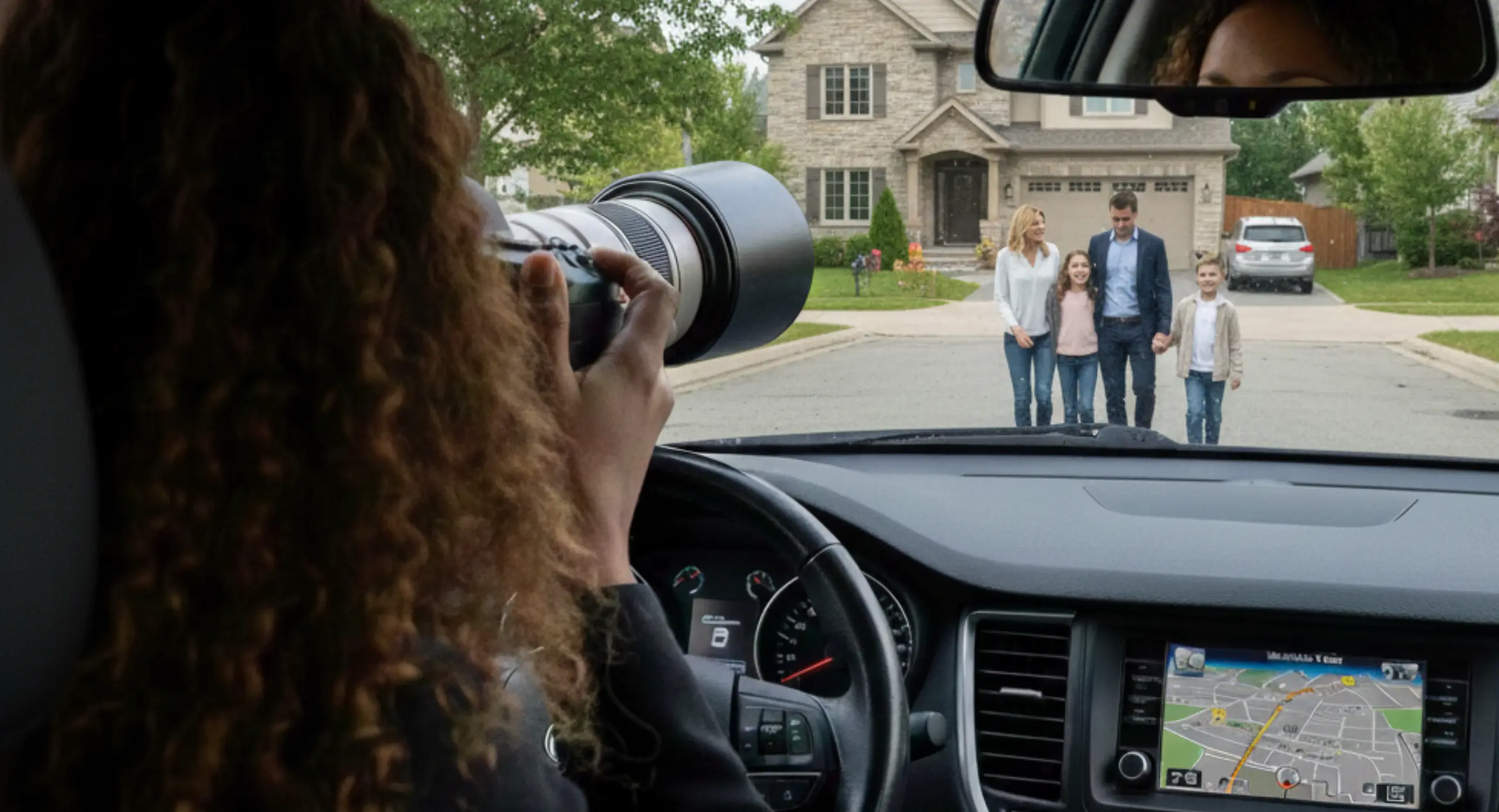
To request a welfare check in Dallas, call 911 if you believe there is immediate danger. If it is not an emergency but you are genuinely worried, contact the law enforcement agency covering that address and ask for a welfare check. It costs nothing. Be ready with the full address, the person’s name and date of birth, when you last had contact, and precisely why you are concerned. An officer will attend, and what happens next depends on what they find.
Here is how to make that call count, and what to do when a single visit is not what your situation actually needs.
Who to call, and in what order
911 first if there is any chance of a medical emergency, a fall, a threat of self-harm or a crime. Do not talk yourself out of it. Dispatchers take exactly this call every day, and an officer can force entry where there is reason to believe somebody is at risk, which nobody else can.
If it is not an emergency, use the non-emergency line for the agency covering the address. In DFW that is not one number. Inside the city limits it is the Dallas Police Department. Outside them it may be Plano, Frisco, Irving, Garland or Richardson police, or a sheriff’s office in Dallas, Tarrant, Collin, Denton or Rockwall county. The address decides, not where you are calling from.
If you get that wrong, the call is normally routed rather than refused, so do not let uncertainty stop you. In our experience working hundreds of cases nationwide, the families who hesitate over which department to ring lose more time than the families who simply ring the nearest one and let it be redirected.
If your worry is abuse, neglect or financial exploitation of an older or disabled adult, that is a separate and free route. Texas Adult Protective Services investigates, and the statewide line is 1-800-252-5400. They hold powers a private firm does not.
How to request a welfare check in Dallas, step by step
Have the full street address including apartment, unit or gate code. Give the person’s full name, date of birth and a physical description. Give their phone number. Say when you last had contact and what was said. Say whether they live alone. Mention medical conditions, mobility problems or memory difficulties, and answer honestly if asked whether there are weapons in the home.
Then the part people underplay. Say specifically why you are worried, in concrete terms. After 17+ years of this work, the difference between a call that gets a prompt response and one that does not is rarely the phrase welfare check. It is whether the caller explained that a woman who has telephoned every Sunday for eleven years did not telephone, and has not answered since Tuesday. Specifics travel. Generalities do not.
Ask for a reference or incident number before you hang up, and write down the time. If you later need to call again, or contact Adult Protective Services, or engage anybody privately, that reference is what connects two visits into a history rather than leaving them as unrelated calls.
One last practical point. If you need to request a welfare check in Dallas outside normal hours, the non-emergency line still takes it, and overnight is frequently when a genuine concern is most worth acting on rather than least.
If you have reached the point where another unanswered call is not going to settle it, a confidential consultation costs nothing and carries no obligation.
What the police will and will not do
They will attend, knock, look for signs of occupancy and distress, and speak with the person if they answer. Where there is reason to believe somebody is at risk they can enter. They can summon an ambulance. That is a genuinely powerful response and it is free.
What they will not do is return next week. They will not give you a written report you can hand to a doctor or a sibling, and privacy rules limit what officers can tell a caller about a competent adult who has not consented to information being shared. Most families are surprised by that last part, and it is the single most common reason they contact us afterwards.
They also cannot make somebody accept help. A competent adult who opens the door and says they are fine has ended the matter as far as an officer is concerned, whatever you know about how they sounded last month.
When a private check is the better call
When you need something a police visit does not produce. A written, dated record of what was observed. A check repeated on a schedule so you can see a trend rather than a snapshot. A visit at a specific time you choose. Or simply a proportionate approach, because for some families a patrol car outside a parent’s house in Richardson is a heavier intervention than the situation warrants and does lasting damage to a relationship already under strain.
We attend in plain clothes and unmarked vehicles, speak with the person where they are willing, and report the same day. What we cannot do is force entry, compel anybody to speak, or overrule a competent adult who says they want to be left alone. Our investigators are not clinicians. We describe what was observed and stop there, because a report that offers a view on somebody’s health or capacity is a report that fails the moment a doctor or a court reads it.
One boundary worth stating plainly. If nobody knows where the person is at all, that is not a wellness check. It is a missing person case, it is worked completely differently, and it starts with a police report. See our Dallas missing persons investigations page.
What to do next
If you believe someone is in immediate danger, call 911 before you do anything else. A police welfare check costs nothing and no officer will think less of you for asking. If it is not that, make the non-emergency call today, and if you already suspect a single visit will not settle it, arrange the documented check at the same time rather than waiting a fortnight to do it anyway.
Our guide to what actually happens during a welfare check sets expectations, what a private check costs covers the money, and if this is really about an ageing parent, this is the piece to read. You can also read a check on an elderly mother that changed what her family did next. See our wellness check investigations page.
Frequently Asked Questions
Can I request a welfare check on an adult who does not want contact?
You can ask for one. Whether it produces anything depends on what is found. A competent adult who answers and says they are fine has ended the matter, and neither police nor an investigator can overrule that. We record the response and report it to you factually.
Is a welfare check free in Dallas?
A police welfare check costs nothing, and Adult Protective Services investigates suspected abuse or neglect of older and disabled adults at no cost. A private check is paid work, worth buying only when you need documentation, scheduling or a lighter approach.
Which agency do I call in DFW?
The one covering the address. Dallas Police inside the city, or Plano, Frisco, Irving, Garland or Richardson police, or a county sheriff, outside it. If you are unsure, call the nearest. Requests are routed rather than refused.
Will the police tell me what they found?
Often less than families expect. Privacy rules limit what can be shared about a competent adult who has not consented. Officers will usually confirm they made contact. A written account of condition and circumstances is generally not something you will receive.
What if the police have already been and I am still worried?
That is one of the most common reasons people call us. A single visit is a snapshot. Where the concern is gradual decline rather than an emergency, a documented check repeated over weeks shows a trend, which is what a doctor or a reluctant sibling usually needs.
If someone you care about has stopped answering, talk it through with somebody who does this work across DFW. A confidential consultation is free, and we will tell you honestly when the right answer is a free police check or a call to Adult Protective Services rather than an invoice from us. Call 214-838-8004 or read more on our Dallas wellness check investigations page.