

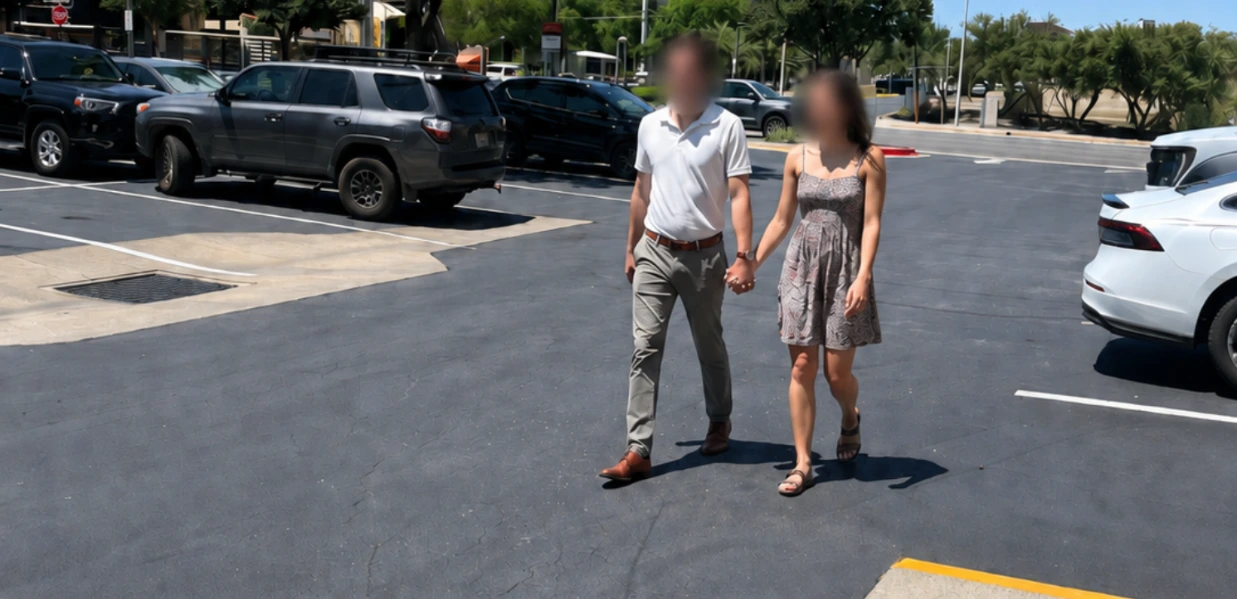
When you hire a surveillance investigator in Atlanta, you are paying for one thing: trained people watching from public places and writing down exactly what they saw, delivered as a report with a chronological log and time-stamped video. You are not paying for a tracker on somebody’s car, a way into a phone, or a recording of a private conversation, and a firm that offers any of those is offering you legal exposure along with its invoice. The firms worth engaging are easy to spot once you know what to listen for. They ask more questions than they answer on the first call, they talk about routes and exits before they talk about price, and they tell you plainly when the assignment you are describing is unlikely to work.
What are you really getting for your money?
A record, not a verdict. Departure and arrival times, locations, durations, vehicles by make, model and plate where visible, and who else was present, described as observed. The periods where nothing happened belong in it too, because a report holding only the convenient moments invites the obvious question about what else was watched.
What we see again and again is clients expecting the investigator to interpret. A good one will not. The report says what occurred and when, and the people whose job it is to decide what it means, whether that is you, an adjuster or a judge, do the deciding.
Which questions should you ask every firm you call?
Start with the licence. Georgia requires private detective businesses to hold a state licence, and you should confirm that for yourself. The Georgia Secretary of State publishes guidance on private detective and security agency licensing and offers an online verification search.
Then ask how they would plan your coverage. This is the question that separates preparation from improvisation. A firm that quotes without asking about the routine, the vehicle, the way the subject leaves home and the distances involved has not thought about your assignment yet.
Ask for the ceiling. Agreed hours that cannot be exceeded without your approval is a budget. Anything looser is an open tab.
And ask what happens if nothing is documented. A straight answer tells you the firm has thought about the client as well as the invoice.
What should you expect when you hire a surveillance investigator in Atlanta?
A first conversation that is mostly them asking and you answering. What is in dispute. What you have seen yourself. Which days and hours matter. The vehicle. Any address already in play.
Then a plan drawn around the metro area as it really moves. Does the subject leave toward GA-400 or toward I-285? Is the likely destination in Fulton, DeKalb, Cobb or Gwinnett? What will the Downtown Connector be doing at that hour? In our experience working hundreds of cases nationwide, direction is the thing most often guessed and most expensive to get wrong. A subject heading north to Alpharetta and one heading east to Decatur cannot be recovered from each other once they have committed to a highway.
If you are at the stage where you need a record more than another argument, a confidential consultation is free and there is no obligation attached to it.
How does a planned assignment differ from an improvised one?
You rarely see the difference, which is why it is worth knowing about. Before a first session our investigators have usually looked at the address in advance: which way the street empties, whether there is a second way out of the subdivision, and how quickly the nearest interstate ramp can be reached. On a quiet cul-de-sac in Roswell or Dunwoody, an unfamiliar car parked for three hours is noticed by a neighbor long before the subject notices it, so the position may need to be a street away, covering the only exit.
Intown is a different problem. In Virginia-Highland, Inman Park or Old Fourth Ward a subject may park once and walk between a restaurant, a bar and a friend’s building, and a vehicle is the wrong tool for that. We have found that a session there is won or lost by whether somebody thought about foot coverage beforehand.
A planned assignment also has a rule for losing the subject. Ours is to let them go and pick them up again at a likely destination before we press close enough to be seen. Over 17+ years of casework the lesson has been consistent: a lost hour can be recovered and a burned assignment cannot.
What answers should end the conversation?
An offer to put a tracker on a vehicle that is not yours. Georgia specifically prohibits secretly placing a GPS or similar device on a vehicle owned or leased by a person who holds a protective order, without that person’s consent, and beyond that rule the question of who has authority over a vehicle is one for your attorney, not for a salesman. We do not place a device on any vehicle our client has no legal authority to track.
The same goes for anyone who offers to read messages, open an email or cloud account, or record a conversation they are not part of. We work from public places, where there is no reasonable expectation of privacy. We do not trespass, record into private areas, or pretext for protected records.
Be careful, too, of the firm that tells you what it expects to find. A client who was promised a result cannot trust the report whichever way it comes out.
What can a good investigator do for you, and what can they not?
They can document conduct that happens in public view, accurately and continuously. They can tell you early when the window you describe is too thin.
They cannot promise a finding, say whether a claim is fraudulent, or tell you how a court will treat the material. They cannot make an unlawful method lawful. And sometimes the right advice is that you need a lawyer before you need us. We have seen that conversation cost us the work and earn the referral later, and we would have it again. One closed file, a parent who needed her concerns about a child documented, is a fair picture of an assignment built around one clear question.
What should you have ready before the first call?
The routine, in as much detail as you can manage. The days it happens, where the person says they are going, the vehicle and plate, any address you suspect, and who else may be there.
Whatever you have gathered lawfully already: dated notes, photographs you took yourself, messages that were sent to you. Keep all of it.
Your deadline, if there is one. If counsel has given you a mediation or hearing date, say so at the start, because it changes how sessions are ordered.
For budget, read what drives surveillance pricing in metro Atlanta. For the limits, read what Georgia law allows an investigator to do. For injury claims, see our piece on claimant surveillance. Our Atlanta surveillance service page explains how we scope and report, and the Atlanta private investigator page shows the full area we cover.
Frequently Asked Questions
How do I know a Georgia investigator is legitimate?
Verify the licence through the Georgia Secretary of State yourself, then ask how they would plan coverage, what the hourly ceiling is, and what happens if nothing is documented. Clear answers to those three matter more than reviews or a polished website. Vague answers are the warning sign.
Can an investigator put a tracker on a car for me?
Only where the client has legal authority over that vehicle, which is narrower than people assume and is a question for your attorney. Georgia also has a specific prohibition protecting people who hold protective orders. Anyone offering tracking casually is describing a risk to you, and usually we will tell you it does not apply.
Will the person find out they were watched?
Not when the work is run properly. Investigators use unmarked vehicles, change position between sessions, and break off a follow when exposure becomes likely. In practice the more common leak is on the client side, through mentioning it to a relative, a colleague, or on a shared phone account.
Should I confront them before I call anyone?
No. It is the most common way an assignment is damaged before it begins. Once somebody knows they are being questioned, the behaviour moves or stops, and whatever you hoped to document becomes more expensive to capture or disappears. Write down what you know and keep it to yourself for now.
What if I can only afford a small amount of coverage?
Say so at the outset, without embarrassment. A single well-chosen session built on a routine you can describe costs far less than open coverage, and it is often enough. A firm worth engaging will help you choose the day and be honest if one day is not realistic.
If you are still deciding whether to hire a surveillance investigator in Atlanta at all, begin with a conversation, not a quote. A confidential consultation is free, carries no obligation, and includes our honest view on whether the assignment is worth running. Call 404-671-3292 or read more on our Atlanta surveillance investigations page.