

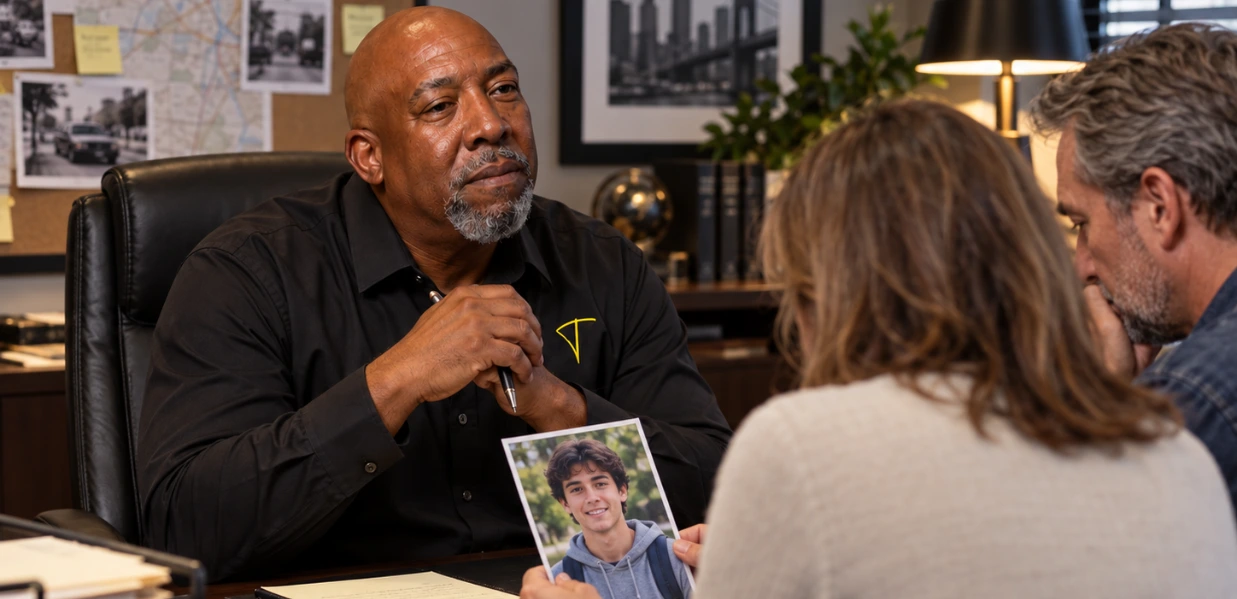
 Missing persons investigation
Missing person investigations begin with a feeling most families recognize immediately: something is wrong. A call goes to voicemail. A text sits unread.
A person who always checks in has not been heard from, and the silence starts to feel different from the usual quiet.
If you are in that moment now, start here. If you believe someone is in immediate danger or needs urgent medical help, call 911. Everything else in this guide is meant to help you take clear, careful next steps.
First Steps When a Loved One Goes Quiet
Not every silence means a crisis. People travel, lose phones, switch off for a few days, or need space. Still, when the silence breaks a pattern, trust that instinct and start gathering facts.
Try the simple things first. Call and text again, contact friends, family, and coworkers, and check with places the person usually goes. Make a note of who you spoke with and what they said.
Write down when you last had contact and what the person said or did. Those details can matter later, and they are easy to forget under stress.
If you cannot reach the person and your concern is growing, do not wait for certainty. Move to the next step.
[Suggested image: a person holding a phone with an unanswered call, looking concerned | Alt text: “missing person investigations begin when a loved one stops responding”]
Contact Law Enforcement First
When a loved one may be missing, the first call belongs with law enforcement. A missing person report should be filed with the local law enforcement agency that has jurisdiction.
Many people believe they must wait 24 or 48 hours before reporting. The Texas Department of Public Safety states that under Texas law there is no waiting period before a missing person record can be filed.
Law enforcement can enter the person into national and state databases and begin a response. A private investigator does not replace that step. We work alongside it.
If a report has already been filed, keep the case number. Ask who is handling it and how to share any new information.
What Is a Wellness Check?
A wellness check is a request for someone to go to a person’s location and confirm that they are safe. These checks are typically requested through local law enforcement, often through the non emergency line, and in an emergency through 911.
Wellness checks can be helpful when you are far away, when a person has missed regular contact, or when something about the situation concerns you. They are a quick way to get eyes on a situation.
A wellness check confirms safety at a moment in time. It does not always answer where someone went or why they stopped responding. That is where missing person investigations can add value.
How Missing Person Investigations Work
Private missing person investigations are built on information and verification. An investigator gathers what is known, researches what can be confirmed, and follows leads in a lawful, organized way.
That can include records research, verifying addresses and contact information, reviewing publicly available information, and identifying relatives, associates, and employers who may know something. It can also include interviewing willing individuals and documenting what each person says.
Investigators also look for patterns. Where does the person usually go? Who do they talk to?
What changed in the days before the silence began?
A good investigator organizes all of this into a clear picture and reports it. Where it makes sense, that information is shared with law enforcement so the efforts support each other.
Missing Person Investigations by the Numbers in Texas
The scale of this issue is larger than many families realize. The Texas Department of Public Safety Missing Persons Clearinghouse reported 40,309 missing person entries into the FBI National Crime Information Center for Texas in 2025.
Of those entries, 28,229 were for ages 0 to 17, and 12,080 were for ages 18 and over. The department notes that these figures count record entries into the national database.
The numbers are a reminder that law enforcement handles a very large volume of cases. Families who bring organized information and stay in touch with the assigned agency help keep a case moving.
Why Timing Matters in Missing Person Investigations
Early action protects options. Memories are fresh, phone records and messages are easier to trace, and the people who last saw the person are easier to reach.
Waiting also lets practical details fade. Surveillance footage may be overwritten, social media activity can change, and routines are harder to reconstruct.
That is why acting early matters even when you hope the explanation is simple. If the person turns up safe, you have lost nothing, and if not, you have gained valuable time.
When the missing person is a child, the stakes are even higher. Contact law enforcement immediately and do not wait to gather additional information first.
What Information Helps Most
The more you can share at the start, the faster the work can move. You do not need everything, and you should not delay reaching out because something is missing.
Helpful details include a recent photograph, a physical description, and the date, time, and place the person was last seen or heard from. Phone numbers, vehicle information, known addresses, workplaces, and regular routines also matter.
Names of friends, relatives, and partners help, along with any recent changes such as a move, a job change, or a conflict. Anything relevant to the person’s safety should be shared with law enforcement as well.
Gather what you can, and keep it organized. A simple timeline written in your own words is often a strong starting point.
[Suggested image: a family member organizing a timeline and photographs at a table | Alt text: “information that helps missing person investigations”]
Where a Private Investigator Can Help
Law enforcement carries the responsibility for the official response. A private investigator can add focus, time, and dedicated effort to a single matter.
That may include locating a person who is not in contact, verifying leads that families have gathered, and documenting what was found. It may also include helping a family decide which steps to take and in what order.
Missing person investigations are not always dramatic. Many involve a relative who moved, changed a phone number, or chose to step away from contact. Finding that person and confirming they are safe can bring enormous relief.
What Happens When the Person Is Found
Sometimes the answer is simple. The person is safe, they simply stopped responding, and they are glad to hear from you. Other times the situation is more complicated.
An adult has the right to decide whether they want contact. If a person is located and does not wish to be contacted, an investigator can confirm that they are safe and relay that information as appropriate, while respecting the person’s wishes and the law.
If a person is in danger, injured, or in distress, the right step is to involve law enforcement or emergency services immediately. Safety comes before everything else.
What We Will Not Do
Because this work is sensitive, a responsible firm has limits. We evaluate each request to confirm that the purpose is lawful and appropriate.
We will not help locate a person for someone who may intend them harm, or who may be the person that individual is avoiding for safety reasons. We will not hack accounts, access private messages without lawful authority, trespass, or impersonate others.
If a request raises safety concerns, we say so and explain why. In some situations the best path is law enforcement, an attorney, or a victim services organization.
Mistakes Families Make When Someone Goes Quiet
Fear leads to quick decisions, and some of them create problems. A few mistakes are worth avoiding.
Waiting too long to contact law enforcement is the most common. Sharing private details publicly can also backfire, so think carefully before posting sensitive information online.
Confronting people you suspect or entering a home or accessing accounts without proper authority can create legal trouble and may hurt the search. If you are unsure, ask law enforcement or an attorney before taking action.
Finally, avoid assuming the worst or the best. Stay focused on facts, and let verified information guide what you do next.
How the Process Works With TPI
When you contact Terrance Private Investigator & Associates, we start by listening. We ask what has happened, when you last had contact, and what steps you have already taken.
We gather the basic facts and evaluate whether the assignment is lawful, realistic, and appropriate. We explain what we can do, what may limit the result, and what the scope and cost could look like before any work begins.
If we move forward, we follow the agreed plan and keep you updated. If we believe law enforcement, an attorney, or another resource should be involved, we tell you plainly.
Frequently Asked Questions About Missing Person Investigations
How long should I wait before reporting someone missing?
You do not need to wait. The Texas Department of Public Safety states that under Texas law there is no waiting period before a missing person record can be filed. Contact local law enforcement as soon as you are concerned.
What is the difference between a wellness check and a missing person report?
A wellness check asks for someone to confirm a person’s safety at a location. A missing person report starts a broader response when someone cannot be found. Your situation may call for one or both.
Can a private investigator find a missing person?
A private investigator can research, verify, and follow lawful leads to try to locate someone, but no honest firm can promise a result. Missing person investigations often work best alongside law enforcement.
Does a private investigator replace the police?
No. Law enforcement holds the official response. A private investigator adds dedicated effort and can coordinate with officers when appropriate.
What if the person does not want to be found?
Adults have the right to choose contact. An investigator may confirm that the person is safe and relay that information as appropriate, while respecting their wishes and the law.
Key Takeaway: Missing person investigations start with a simple rule: act early and start with law enforcement. Texas has no waiting period for filing a missing person record, and a wellness check can confirm safety at a location. A licensed private investigator can then add dedicated, lawful effort by verifying information, following leads, and documenting findings, while safety and the official response stay with law enforcement.
Why Terrance Private Investigator & Associates
Terrance Private Investigator & Associates is a licensed Texas private investigation firm founded and led by Terrance J. Sanders. We serve families, attorneys, and businesses across Houston, Dallas, Austin, San Antonio, Las Vegas, and Atlanta.
We handle missing person investigations with care, discretion, and honesty. We tell you what we can verify, what we cannot, and what a realistic path forward looks like.
If a loved one has gone quiet and you need help making sense of what to do, contact TPI. You do not have to carry this alone.
Clarity begins with facts, not assumptions.
Written by the TPI Content Team
Reviewed by Terrance J. Sanders, Licensed Texas P
Resources
Internal: Services | Austin Missing Person: The First 24 Hours | New Case Request
External: Texas DPS Missing Persons Clearinghouse Brochure | Texas DPS Missing Persons Entries 2025 | NamUs: National Missing and Unidentified Persons System
This article provides general educational information and is not legal advice. If you believe someone is in immediate danger, call 911.