

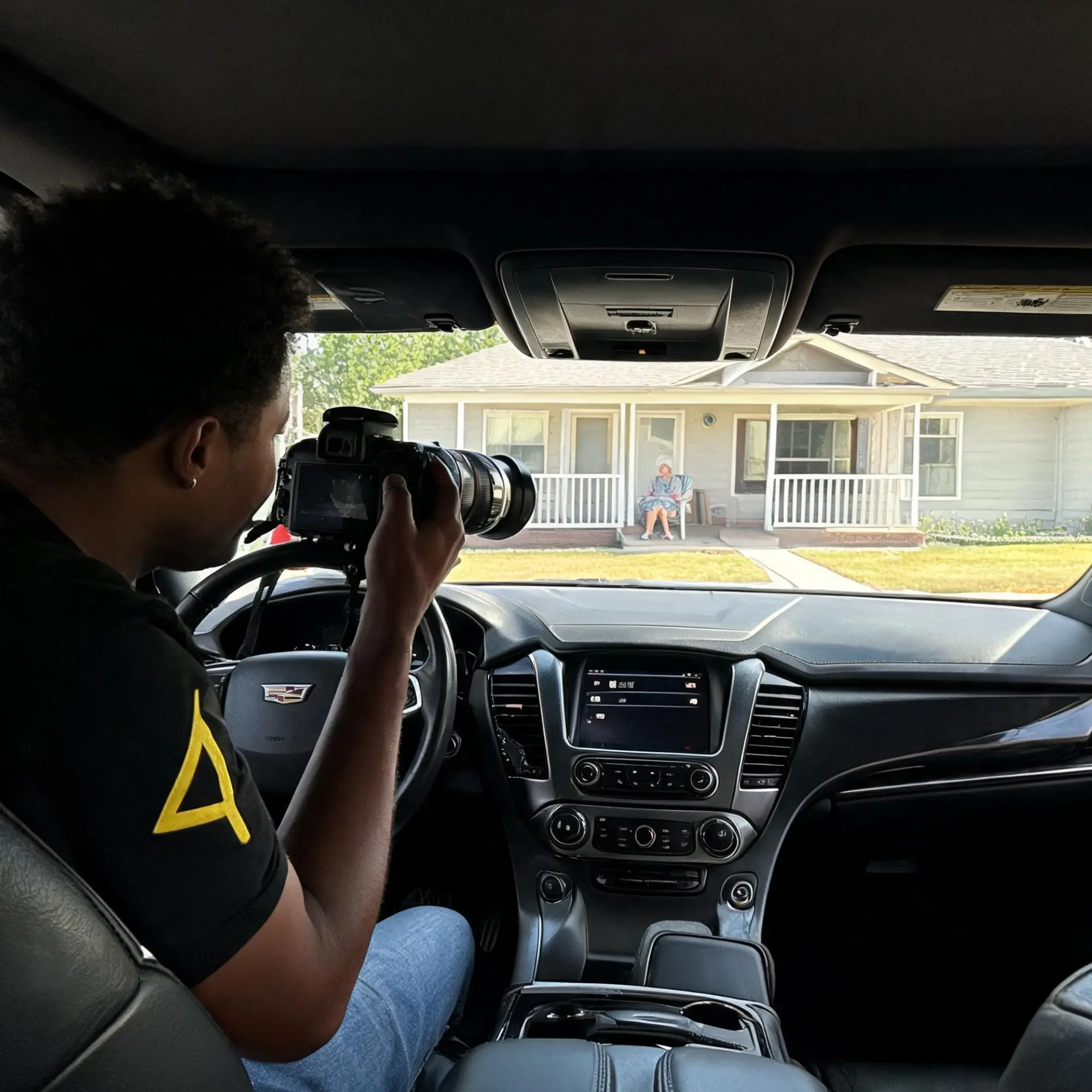
Knowing what happens during a welfare check in Dallas before you request one makes the call easier and the outcome less disappointing. An officer attends the address, knocks, looks for signs of occupancy or distress, and speaks with the person if they answer. Where there is reason to believe somebody is at risk they can force entry and call an ambulance. Where a competent adult answers and says they are fine, that generally ends it. And privacy rules mean you may be told considerably less afterwards than you expect, which surprises most families.
Here is the sequence, and what each stage does and does not settle.
The sequence, step by step
You call. For an emergency that is 911. Otherwise it is the non-emergency line for the agency covering the address, which in this metroplex means Dallas Police inside the city and Plano, Frisco, Irving, Garland, Richardson or a county sheriff outside it. The dispatcher takes the address, the person’s details, your relationship, when you last had contact, why you are worried, and whether there are medical conditions or weapons in the home.
The call is then prioritised against everything else happening in that jurisdiction. A report suggesting a medical emergency or self-harm risk moves quickly. A concern that somebody has not answered the phone for two days is real, and it is triaged below an emergency in progress.
An officer attends, knocks and announces. They look for signs of occupancy: vehicles, accumulated post, lights, sounds. If the person answers, they speak with them and assess whether there is an immediate concern. If nobody answers and circumstances suggest risk, they may enter. If nothing suggests risk, they will usually clear the call.
What happens during a welfare check in Dallas when nobody answers
This is the part families dread and it is worth understanding. An officer cannot enter simply because somebody is not home. There has to be reason to believe a person inside is at risk, and an unanswered door on its own is not that.
What tends to change the picture is corroboration. A car that has not moved in days, post piling up, a neighbour who has not seen them, a medical condition on record, a message that read badly. That is why the specifics you give the dispatcher matter so much, and why writing them down before you call is worth the two minutes.
If entry is not justified, the officer will clear the call and you are left roughly where you started. In our experience working hundreds of cases nationwide, this is the single most common reason a family contacts a private firm, not because the police did anything wrong but because the threshold was not met and nobody is going back tomorrow.
If you have reached the point where another unanswered call is not going to settle it, a confidential consultation costs nothing and carries no obligation.
Why you may be told very little afterwards
Because a competent adult has privacy rights, and those do not dissolve because a relative is worried. Officers will usually confirm they made contact. Detail about condition, circumstances or what was said is generally not something a caller receives, particularly where the adult has said they do not want information shared.
Families find this genuinely painful, and it is not obstruction. It is the same protection that would apply to you. It is also the clearest practical difference between a police check and a private one: we are engaged by you, so what our investigator observes is reported to you in full, factually, in writing.
What we cannot do is anything requiring authority. No forced entry, no compelling anybody to speak, no overruling a competent adult. Our investigators are not clinicians. We describe what was observed and stop there, because a report that offers a view on somebody’s health or capacity is a report that fails the moment a doctor or a court reads it.
What a private check adds, and what it does not
It adds a written dated record, a scheduled visit, a repeat visit, and an approach proportionate to the situation. For an ageing parent in Richardson who is probably fine, a plain-clothes investigator having a five-minute conversation is a far lighter intervention than a patrol car outside the house, and it does less damage to a relationship already under strain.
It does not add authority, and it is not a substitute for an emergency response. If you believe someone is in immediate danger, call 911 before you do anything else. A police welfare check costs nothing and no officer will think less of you for asking.
And if what you are really worried about is abuse, neglect or financial exploitation of an older or disabled adult, there is a separate free route that carries powers no private firm has. Texas Adult Protective Services investigates, and the statewide line is 1-800-252-5400.
One boundary worth repeating. If nobody knows where the person is at all, this is not a welfare check. That is a missing person case, worked entirely differently, and it starts with a police report which also costs nothing. See our Dallas missing persons investigations page. You can also read a check on an elderly mother that changed what her family did next.
What to do next
Write down the specifics before you call, because they are what determines the response: last contact and what was said, changes in routine, medical conditions, whether the car has moved, and what neighbours have noticed. Then make the call.
Our guide to requesting a welfare check covers who to ring and what to say, what a private check costs covers the money, and the piece on ageing parents covers the longer-term problem most families are really facing. State and local ageing services are listed by Texas Health and Human Services. See our wellness check investigations page.
Frequently Asked Questions
How long does a welfare check take?
The attendance itself is usually brief, often under fifteen minutes. How long before an officer arrives depends on the priority assigned and demand at the time. Most private checks across DFW are attended the same day or the next, at a time agreed with you.
Can police break down the door?
They can force entry where there is reason to believe someone inside is at risk. An unanswered door alone is not enough. Corroborating detail such as an unmoved vehicle, accumulated post, a known medical condition or a worrying message is what changes that assessment.
Will they tell me what they found?
Usually less than you hope. Officers will normally confirm contact was made, but privacy rules limit detail about a competent adult, especially one who has not consented to information being shared. A private check reports to you in full because you engaged it.
Can I be present during the check?
For a police check, no, and turning up alongside officers tends to make matters worse. For a private check we will discuss it, though in our experience a visit from the family member somebody has been avoiding is the fastest way to get a door closed.
What if they are fine but clearly not coping?
That is the most common real outcome and it is where documentation matters. A factual record of what was observed, repeated over a few visits, is what gives a doctor, a reluctant sibling or an area agency on ageing something concrete to act on.
If someone you care about has stopped answering, talk it through with somebody who does this work across DFW. A confidential consultation is free, and we will tell you honestly when the right answer is a free police check or a call to Adult Protective Services rather than an invoice from us. Call 214-838-8004 or read more on our Dallas wellness check investigations page.
